
Tile Roof Repair in Houston, TX
A tile roof has two parts: the tile you see, and the underlayment underneath that does the actual waterproofing. Most tile leaks come from the second part, not the first.
For tile roof repair Houston, the first thing to understand is that the tile is not the waterproofing. Tile sheds water — it overlaps, channels rain down the slope, and takes the sun and the hail. The underlayment beneath it is what keeps water out of your house. When a tile roof leaks and the tiles look fine from the street, the underlayment has usually failed underneath them. That is the diagnosis that decides whether the job is a few tiles or a lift-and-relay, and it is the diagnosis this page is built around.
By RoofDetect Pro — Last updated: November 17, 2026
Call (831) 623-8078 — free roof inspection and written estimate, no obligation.
Availability varies by ZIP code, time and service — call (831) 623-8078 to confirm. Weekend and holiday availability is not guaranteed everywhere.
What a Tile Roof Is
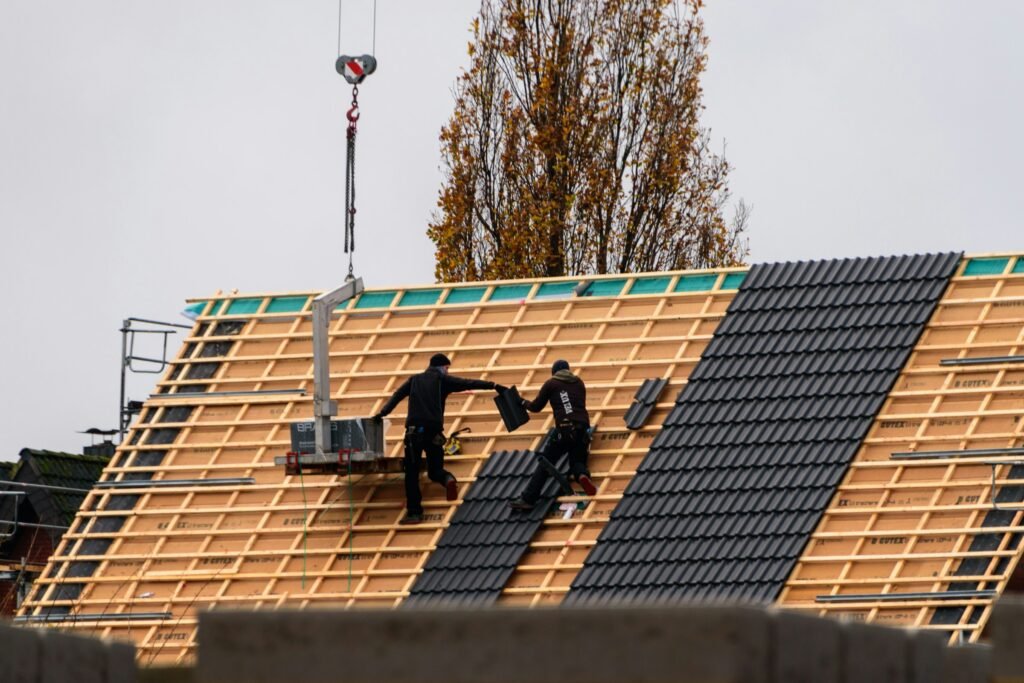
A tile roof is a system, not a surface. Tiles are laid in overlapping courses over battens, and beneath them sits the underlayment — a waterproof membrane over the decking — with flashing at every valley, ridge, chimney and penetration. The tile is the armour. The underlayment is the seal. A tile roof works only when both are sound, and it fails when either one gives out.
Houston’s tile roofs are mostly clay or concrete, with slate and synthetic tile on some homes. For the profiles and colours concrete tile comes in, see Eagle Roofing Products.
| Tile type | Lifespan | What to know in Houston |
|---|---|---|
| Clay | 50–100 years | Fired clay holds its colour, resists moisture, and is the lightest tile. The premium choice on Houston’s Mediterranean and Spanish-style homes. |
| Concrete | 30–50 years | Cement, sand and water — cheaper than clay, heavier, and it can fade and absorb more moisture over time in Houston humidity. |
| Slate | 75–100+ years | Natural stone, very heavy, very long-lived, and the most expensive to repair. Rare in Houston, and it needs a structure built for the weight. |
| Synthetic | 30–50 years | Made to look like clay or slate at a lower weight and price. Easier to handle, but a shorter track record than the real thing. |
Tile roofs are heavy — far heavier than shingles — and that weight is part of why they last: they do not lift in wind the way light materials do. It is also why a tile roof must be inspected before any repair: the structure underneath has to carry the weight, and a deck that has rotted under a leak may not. The Tile Roofing Industry Alliance — the tile industry’s association — writes the code-recognised installation manuals for clay and concrete tile, and its training is built around exactly this point: a tile roof is a system, and the tile is only the part you can see.
The Underlayment Is the Real Leak Source
This is the single most important thing on this page, and it is the thing most tile roof owners never hear: when a tile roof leaks, the underlayment has usually failed — not the tile.
A tile roof can leak with every tile intact. The underlayment ages under Houston heat and UV — it dries, cracks and thins over decades, and once it does, rain that gets past the tiles (and some always does, at the overlaps and the valleys) finds its way through. The stain on your ceiling is the underlayment’s failure, not the tile’s. That is why tile roof repair Houston starts in the attic, not on the roof: the stain is marked, the decking above it is checked for wetness and dark staining, and the water is followed uphill toward the failed section of underlayment. Our roof leak detection page explains how that tracing works, and our roof inspection page covers what a full inspection checks around every penetration.
The fix for failed underlayment is called a lift-and-relay: the tiles over the failed section are carefully removed and set aside, the old underlayment is stripped, new underlayment is laid, and the same tiles are reinstalled. The tiles themselves usually survive — they are the long-lived part of the system, and a 40-year-old clay tile can go straight back on a new underlayment. That is also why an underlayment job costs what it does: it is not a patch, it is a section of roof taken apart and put back together, tile by tile, by hand. A quote that offers to seal over the leak from above without touching the underlayment is not a repair. It is a delay.
Two things make underlayment failure worse in Houston. The first is heat: the underlayment under a tile roof bakes in the attic all summer, and heat is what ages it fastest. The second is time: a tile roof’s tiles can last 50 to 100 years, but the underlayment underneath them typically lasts 20 to 30. A tile roof that is 25 years old with its original underlayment is a roof whose waterproofing is near the end of its life, even if every tile still looks perfect from the street.
Common Tile Roof Problems
Most tile roof repair Houston jobs involve one of five failures. Knowing which one you have decides what the repair costs.
Cracked or broken tiles. Hail, falling branches, and foot traffic break tiles. A cracked tile exposes the underlayment beneath it to direct sun and rain, and the underlayment in that one spot ages years in months. A broken tile is a small job — one tile replaced — but it is not a job to leave, because the damage it does underneath is the expensive kind.
Slipped or uneven tiles. High wind and failing fasteners let individual tiles shift out of alignment, opening gaps in the courses. A slipped tile is visible from the ground as a row that no longer lines up, and the gap it leaves is a direct path for wind-driven rain. Slipped tiles are common after hurricanes and the May 2024 derecho, and they are the failure most often found in the same row as the leak.
Crumbling ridge mortar. The cement or mortar along the peaks of the roof — the ridge and the hips — breaks down over time in Houston heat. When it crumbles, water enters at the highest point of the roof and runs down inside the system before it shows up as a stain. Ridge mortar is a small repair when it is caught early and a large one when it is not, because the water it lets in travels.
Flashing and valley failures. Valleys collect leaves and dirt, and trapped debris holds water against the flashing, corroding it and pushing water sideways under the tiles. Flashing around chimneys, skylights and walls fails the same way it does on any roof — by age and movement — but on a tile roof the failure is harder to see, because the tile hides it. See our skylight repair page for what flashing failure looks like around a roof penetration.
Debris in the valleys. Houston’s trees drop leaves year-round, and a valley full of debris is a dam. Water that cannot run down the valley runs sideways under the tiles instead. Clearing valleys is maintenance, not repair — but a valley that has been blocked for years is often a valley whose flashing has already corroded.
Houston: Hail, Wind, Heat and Humidity
Tile is a good Houston material, and Houston is a hard place for a tile roof. Four conditions decide how long one lasts here.
Hail. Houston sits in a hail corridor, and hail is the one Houston condition that breaks tile outright. A hailstone that would dent a shingle cracks a clay or concrete tile, and a cracked tile is a leak waiting for the next rain. After any hailstorm, tile roof repair Houston begins with a check — not just of the tiles you can see from the ground, but of the cracked tiles on the far slope and the ridge. See our storm damage page for what hail does to a roof and how a claim works, and our emergency roof repair page if a storm has opened the roof up. Hurricane Harvey in 2017 and Beryl in July 2024 broke tiles across the region, from Katy and Cypress to Spring, The Woodlands, Sugar Land and Pearland.
Wind. Tile is heavy, and weight resists wind — but wind still slips rows, lifts ridge caps, and drives rain sideways under the courses. The May 2024 derecho and Hurricane Beryl in July 2024 both slipped tile rows across Houston. A tile roof that survived a hurricane with no visible damage can still have slipped tiles on the windward slope, and the leak they cause may not show up until the next heavy rain.
Heat. Houston sun bakes a tile roof all summer, and heat is what ages the underlayment and crumbles the ridge mortar. Clay tile itself handles heat well — it is fired clay, and it does not soften or warp. But the mortar, the sealant and the underlayment underneath it all age faster here than in a cooler climate, which is why a Houston tile roof needs its underlayment checked on a shorter cycle than the same roof would up north.
Humidity. Houston humidity does two things to a tile roof: it feeds the moss and algae that grow on shaded tiles, and it keeps the underlayment damp for longer after rain. Concrete tile absorbs more moisture than clay, which is one reason concrete fades and weathers faster here. Moss on a tile roof is not just cosmetic — it holds moisture against the tile and the underlayment, and it should be cleaned rather than left to spread.
Repair or Replace the Tile Roof?
Tile roof repair Houston makes sense when the roof is mostly sound and the failure is local. It stops making sense when the failure is everywhere. The published rules the industry uses are simple, and they are worth knowing before anyone quotes you:
- Repair when less than 25% of the roof is damaged, the repair costs less than 30% of a new roof, and the roof is under 20 years old.
- Replace when the roof is over 20 years old, the repair estimate is over $3,000, or damage covers more than 25% of the roof.
- Angi’s version of the same rule: replace when a repair would cost 50% or more of a replacement.
The lifespan gap between tile types decides which side of that line your roof sits on. A 30-year-old clay tile roof has decades of tile life left — the tiles are the long-lived part — so the question is the underlayment, and a lift-and-relay is usually the right call. A 30-year-old concrete tile roof is near the end of its own life as well as its underlayment’s, so the same job may be money spent twice. And a roof whose tiles are failing across the whole surface — cracking everywhere, not just in one spot — is not a repair candidate at any age. See our roof replacement cost guide for what a re-roof costs and what a low bid leaves out.
One more honest point: a tile roof is expensive to replace, and that cost is the reason to repair it properly while it can still be repaired. A tile that is replaced one at a time, an underlayment that is relayed one section at a time, and a ridge that is re-pointed before it crumbles — that is how a 50-year roof actually reaches 50 years.
How a Tile Repair Is Done
A tile repair is slow, careful work, and the slowness is the point. A crew that rushes a tile roof breaks more tiles than it fixes.
Walking the roof. Tile is brittle, and walking on it wrong cracks it. A tile crew walks on the lower third of the tiles, near the overlap where the tile is supported by the one beneath it, and uses foam pads or planks to spread the weight. A roofer who walks a tile roof the way he walks a shingle roof will crack dozens of sound tiles getting to the one broken one. If a contractor tells you walking on tile is no different from walking on shingles, that is the moment to get a second opinion.
Matching the tile. A repair is only invisible if the replacement tile matches — same profile, same colour, same size. Houston’s older tile roofs often use profiles that are no longer made, and matching them means sourcing from salvage, from a manufacturer’s remaining stock, or from a specialty supplier who can custom-produce a run. Where an exact match is not available, the honest answer is to discuss the alternatives before the work starts: a close match in a less visible spot, or a wider relay that blends the new tiles in. A repair that uses the wrong tile in the middle of the front slope is a repair you will see every day.
Lift-and-relay. For underlayment failure, the crew removes the tiles over the failed section — carefully, one by one, and stacked in order so they go back in the same place — strips the old underlayment, lays new underlayment, and reinstalls the same tiles with new fasteners where needed. The tiles usually survive. The underlayment does not, and it is not supposed to: it is the wearing part of the system, and replacing it is the job.
Ridge and flashing. Ridge mortar is re-pointed or replaced, valley flashing is repaired or replaced, and every penetration is re-flashed as part of the same job. A tile repair that fixes the tiles and leaves a crumbling ridge is a repair that leaks again at the next storm.
Tile vs Shingle: What Costs More and Why
A tile roof costs more to repair than a shingle roof, and the reasons are straightforward: the material is heavier, it is brittle, every tile is handled by hand, and matching a discontinued profile takes time and sourcing. A shingle repair is a few shingles nailed in. A tile repair is a section of roof taken apart and put back together.
| Tile roof | Shingle roof | |
|---|---|---|
| Typical repair range (national) | $500–$2,500 | $150–$1,000 (minor) |
| Per square foot, installed | Concrete $7–$19 · Clay $8–$25 | Asphalt $3–$6 |
| Lifespan | Clay 50–100 yr · Concrete 30–50 yr | Asphalt 15–30 yr |
| What fails first | Underlayment (20–30 yr) | The shingle itself |
| Walking on it | Cracks tiles if done wrong | Forgiving |
Ranges: Angi 2026, HomeGuide 2026. The comparison that matters is not the repair bill — it is the repair bill against the life you get. A tile roof costs more to fix and lasts two to three times as long as a shingle roof. A shingle roof costs less to fix and needs replacing sooner. Neither is the wrong roof; they are different trades, and the repair price is part of the trade.
What Tile Roof Repair Costs
What tile roof repair Houston costs depends on how many tiles, whether the underlayment is involved, and which tile is on the roof. These are published US national ranges — not RoofDetect Pro’s prices and not Houston prices. Your written estimate is what your job costs.
| Job | Published US national range |
|---|---|
| A few broken tiles replaced | $60–$125 per tile |
| Minor repair (100–500 sq ft) | $300–$1,200 |
| Moderate repair — leak, flashing, ridge (500–1,000 sq ft) | $900–$2,500 |
| Large repair (1,000+ sq ft) | $2,000–$7,000 |
| Underlayment / structural repair | $7,000+ (can exceed) |
| Full tile replacement, installed | Concrete $7–$19 / sq ft · Clay $8–$25 / sq ft |
Ranges: Angi 2026 (updated 15 Oct 2026), HomeGuide 2026. Angi’s national average for a tile roof repair is about $1,700, with most jobs falling between $900 and $2,500. Labour runs $50–$120 per hour in the same guides.
What pushes a job up the range: underlayment work (a lift-and-relay is a section of roof rebuilt by hand); a discontinued tile profile that has to be sourced or custom-made; a steep or hard-to-reach roof; and rotten decking found once the underlayment is opened. Hidden damage is the usual surprise — a small stain on the ceiling can hide a larger wet patch in the decking above it, and the decking is only visible once the tiles and underlayment come off.
Get the written estimate before the work starts, and check that it names the job — tile replacement, flashing, ridge, or lift-and-relay — so you know what you are paying for. A quote that just says “fix tile roof” is not an estimate.
Insurance: Storm Damage vs Wear
Whether insurance pays for a tile roof depends on the same Texas rule as any roof repair claim: sudden and accidental damage is covered, wear and tear is not.
Usually covered: tiles cracked by hail, broken by wind-blown debris, or slipped by hurricane wind; rain that enters through storm damage to the tiles or the flashing around them. Document the storm date and photograph the damage before anything is cleaned up — the same evidence rule as any storm claim. See our storm damage page for the claim steps, and our signs you need roof repair after a Houston storm guide for what storm damage looks like.
Usually not covered: underlayment that dried out and cracked with age; ridge mortar that crumbled after decades of heat; a leak that has been dripping for months while nobody looked; tiles that faded or weathered. Those are maintenance and age — the insurer’s answer is the same as for a worn-out roof.
The deductible question: on most Texas policies the wind and hail deductible is a percentage of the home’s insured value — typically 1% to 5%. A tile repair that costs less than the deductible is not a claim at all; it is a repair you pay for. And if any contractor offers to waive, eat or pay your deductible, walk away — in Texas it is illegal for a contractor to pay, waive or rebate an insurance deductible (House Bill 2102), and it can put the whole claim at risk.
FAQs
Why does my tile roof leak if the tiles aren’t cracked?
Because the tile is not the waterproofing — the underlayment beneath it is. Underlayment ages under Houston heat and UV, dries and cracks over 20 to 30 years, and once it fails, rain that gets past the tiles finds its way through. A tile roof can leak with every tile intact.
Can a tile roof be repaired, or does it need replacing?
Most tile roof leaks are repairs — a few tiles replaced, a ridge re-pointed, or a section lift-and-relayed with new underlayment. Replacement is needed when damage covers more than 25% of the roof, the repair would cost a large share of a new roof, or the roof is over 20 years old with failing tiles across the whole surface.
How long does a tile roof last in Houston?
Clay tile lasts 50 to 100 years, concrete tile 30 to 50 years, and slate 75 to 100 years or more. The underlayment underneath them lasts 20 to 30 years — so a tile roof’s tiles usually outlive its waterproofing, and the underlayment is the part that gets replaced.
How much does tile roof repair cost?
For tile roof repair Houston homeowners, the published US national ranges are $900–$2,500 for most jobs (Angi’s national average is about $1,700), $60–$125 per tile for individual replacements, and $7,000 or more for underlayment or structural work. Those are national guide figures, not RoofDetect Pro’s prices — your written estimate is what your job costs.
Can you match my existing tiles?
Usually, yes — matching tiles are sourced from the manufacturer’s remaining stock, from salvage, or from a specialty supplier who can custom-produce a run. Where an exact match is not available because the profile is discontinued, the alternatives are discussed before the work starts, and a close match is placed in a less visible spot.
Is it safe to walk on a tile roof?
Only if it is done properly. Tile is brittle, and walking on it the wrong way cracks sound tiles. A tile crew walks on the lower third of the tiles, near the overlap where the tile is supported, and uses pads or planks to spread the weight. Homeowners should not walk on a tile roof to check it — ground and attic checks are the homeowner’s part.
Will insurance cover a leaking tile roof?
If a storm broke it — hail, wind, or debris that cracked tiles or slipped rows — usually yes. If the underlayment simply wore out with age, or the ridge mortar crumbled after decades of heat, usually no. The dividing line is sudden damage versus wear and tear, the same rule as any Texas roof claim.
How is tile different from shingle when it comes to repair?
Tile costs more to repair — it is heavier, brittle, and every tile is handled by hand — but it lasts two to three times as long as a shingle roof. On a shingle roof the shingle itself fails first; on a tile roof the underlayment fails first, and the tiles usually survive the repair.
How often should a tile roof be inspected in Houston?
Once a year, ideally before hurricane season (June to November), and after any major storm — hail, high wind, or a hurricane. Regular inspections catch cracked tiles, slipped rows and crumbling ridge mortar while they are still small jobs, before the underlayment underneath them fails.