
Asphalt Shingle Roofing in Houston, TX
Asphalt shingles are the roof most Houston homes already have — and for asphalt shingle roofing Houston, the choice that matters is not whether to use them, but which kind.
By RoofDetect Pro — Last updated: November 17, 2026
Asphalt shingle roofing Houston homeowners choose starts with one decision: 3-tab or architectural. They look similar from the street, they cost differently, and in Houston they do not last the same number of years. A 3-tab shingle is rated for winds up to 60–70 mph and lasts 15–20 years — often fewer in Houston heat. An architectural shingle is rated for winds up to 110–130 mph and lasts 25–30 years. On a Gulf Coast roof, that difference is not a detail. It is the roof.
Call (831) 623-8078 — free roof inspection and written estimate, no obligation.
Availability varies by ZIP code, time and service — call (831) 623-8078 to confirm. Weekend and holiday availability is not guaranteed everywhere.
What Asphalt Shingles Are
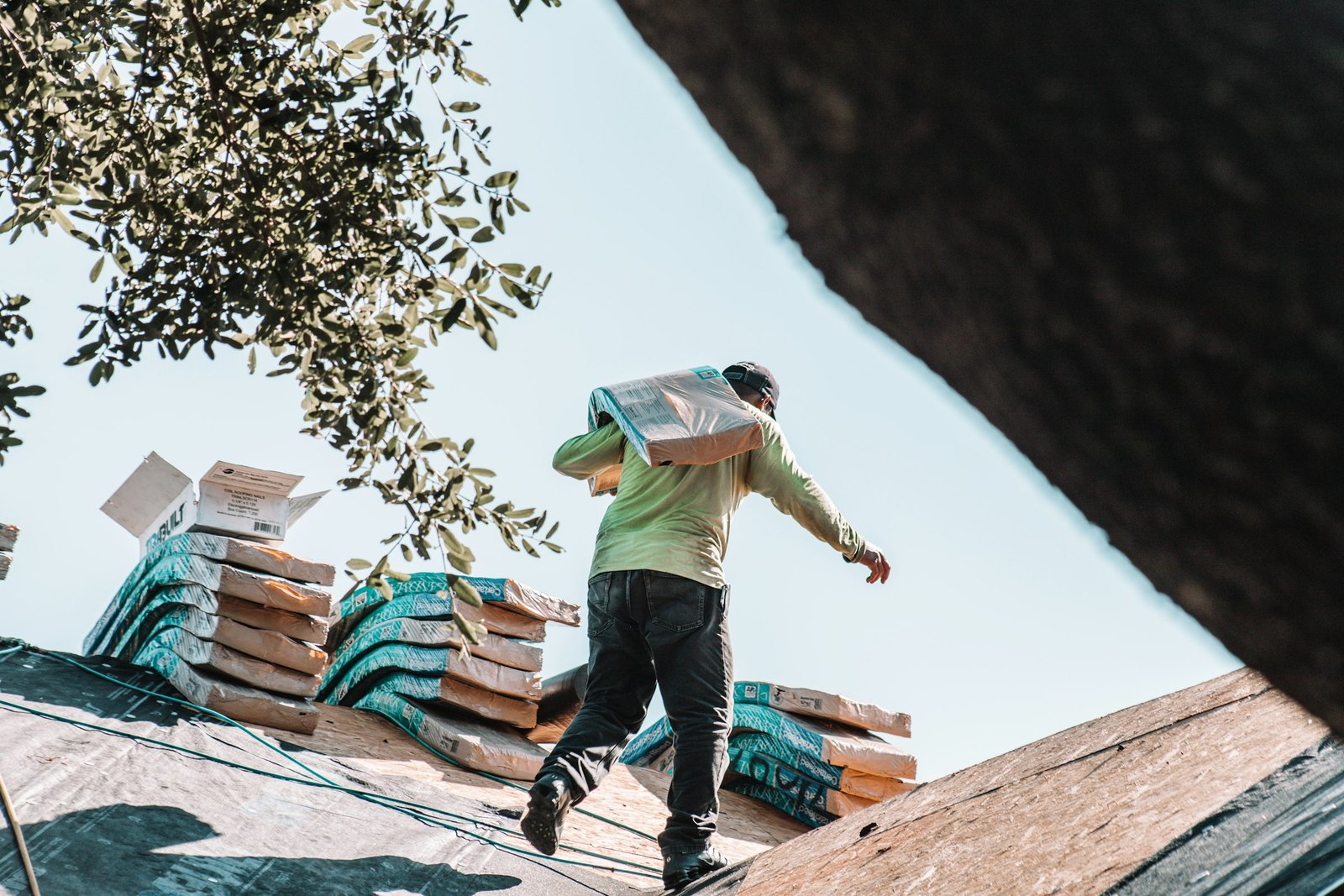
An asphalt shingle is a fiberglass mat soaked in asphalt and coated with ceramic mineral granules. The mat gives it strength, the asphalt makes it waterproof, and the granules protect it from the sun and give it its colour. Modern shingles are almost all fiberglass — the older organic kind, made on felt paper, is largely gone from the market. The granules are also what you find in your gutters when a roof starts to age: as they wash off, the asphalt underneath is exposed to the sun, and the shingle wears out faster.
Asphalt is the most common residential roofing in America for three plain reasons: it costs less than metal, tile or slate; it goes on fast — a standard-pitch roof usually takes 1–3 days; and it comes in more colours and styles than any other material. About 75% of American homes carry it, and in Houston the share is higher still, because most Houston homes are sloped-roof houses built for shingles. The asphalt shingle roofing Houston homes have carried for decades is the same material — the difference today is in the type, and the type is where the money goes.
3-Tab vs Architectural vs Premium — The Comparison That Decides the Roof
There are three kinds of asphalt shingle, and they are not three prices for the same roof. They are three different roofs. GAF’s guide to roofing shingles explains the three types — 3-tab, architectural and designer — and what each is built for.
| Shingle | Construction | Wind rating | Lifespan in Houston | Look |
|---|---|---|---|---|
| 3-tab | Single layer, flat | 60–70 mph | 15–20 years (often less in heat) | Flat, uniform |
| Architectural / dimensional | Two layers laminated | 110–130 mph | 25–30 years | Dimensional, shadow lines |
| Premium / designer | Thicker laminate | 110–130 mph | 30–50 years | Mimics slate or cedar shake |
3-tab shingles are the traditional kind: one long asphalt sheet cut into three tabs, giving a flat, uniform look. They are the cheapest shingle and the lightest, and they are also the weakest. A 60–70 mph wind rating is below what a Gulf Coast hurricane brings, and 15–20 years in Houston heat is optimistic — the heat shortens their life, and they are largely being phased out by manufacturers as architectural shingles drop in price.
They are not available in Class 4 impact-resistant versions. When you compare asphalt shingle roofing Houston contractors install, 3-tab is the one to be careful about: it is the cheapest roof you can buy, and in a hail zone it is often the most expensive roof you end up owning, because it needs replacing in 12–15 years instead of 25–30.
Architectural (dimensional, laminated) shingles are two layers of asphalt fused together, which gives them depth, shadow lines and weight. They look like wood shake or slate from the street, they are roughly twice as heavy as 3-tab, and they are the standard recommendation for Houston homes: 110–130 mph wind ratings, 25–30 years of life, and Class 4 impact-resistant versions widely available. They account for roughly 70% of new residential shingle installs in the US. They cost more per square foot than 3-tab, but over the life of the roof they are the cheaper choice — one architectural roof outlasts almost two 3-tab roofs.
Premium / designer shingles are thicker architectural shingles made to imitate slate or cedar shake. They cost the most of the three, they last the longest — up to 50 years for some lines — and they are the choice when the look of the roof matters as much as its life: a high-end home, a historic neighbourhood, or a roof that has to carry the curb appeal of the whole house. If the slate look is what you want but the slate price is not, premium shingles are the middle ground. Our tile roofing page covers the real thing, for comparison.
Class 4 Impact-Resistant Shingles — The Answer to Houston Hail
Houston sees several hail events most years, per the National Weather Service’s severe weather statistics, and hail is what kills a shingle roof early. A standard shingle bruises: the hail knocks granules off, the asphalt underneath is exposed, and the shingle ages years in a single storm. Class 4 impact-resistant shingles are built for exactly that. They are made with rubberised polymers (SBS) that flex instead of cracking, and they are tested by dropping 2-inch steel balls on them from a height to simulate hail impacts.
Class 4 is the shingle answer to hail — and for asphalt shingle roofing Houston, hail is not a rare risk. A Class 4 shingle costs more than a standard architectural shingle, and it is worth pricing on any Houston roof: it is the difference between a roof that survives a hailstorm and a roof that needs an insurance claim after one. Some insurers also price Class 4 roofs differently, so ask your carrier whether an impact-resistant roof changes your premium — it sometimes does, and the saving can help pay for the upgrade.
Class 4 does not make a roof hail-proof. Nothing does. What it does is make the roof survive the hail Houston actually gets, instead of failing on the first serious storm.
Houston Heat, Humidity and Algae — Why Shingles Age Faster Here
Houston heat is why asphalt shingle roofing Houston lasts fewer years than the same shingle in a cooler climate. A Houston roof sits in intense sun for most of the year, and the heat does three things: it dries the asphalt, it makes the shingles expand and contract every day, and it shortens the life of the cheapest shingles first. A 3-tab roof rated for 20 years in a mild climate can be done in 12–15 in Houston. An architectural roof holds up better, but it still ages faster here than the brochure number suggests — treat every published lifespan as a best case, and the Houston number as a few years shorter.
Humidity brings the second problem: algae. The black streaks running down Houston roofs are algae (Gloeocapsa magma), a blue-green algae that feeds on the limestone filler in shingles and thrives in warm, damp air. It does not eat the roof — the streaks are mostly cosmetic — but it holds moisture against the shingle, and it makes a roof look ten years older than it is. Algae-resistant shingles carry copper granules that kill the algae on contact, and they are worth asking about on any Houston roof. Moss is the related problem in shaded, damp spots: it grows under the shingle edges, lifts them, and lets wind-driven rain underneath. A roof that stays damp — shaded by trees, poor ventilation, clogged gutters — grows both.
Ventilation is the fix that connects heat and moisture. An attic with balanced intake and exhaust vents stays cooler, which lowers the temperature the shingles sit at, and it carries moisture out instead of letting it condense on the underside of the decking. A roof with no ventilation ages from both sides at once. When a roof is replaced, the ventilation is part of the job — not an extra.
Colours, Curb Appeal and HOA Rules
A shingle roof is the largest visible surface on most Houston homes, and its colour sets the look of the whole house. Architectural shingles come in far more blends than 3-tab — multi-tone colours with shadow lines that read as slate or shake from the street — and the choice is worth taking seriously, because the roof will be there for 25 years. Darker colours absorb more heat; lighter colours reflect more of it, which matters on a Houston summer afternoon. Neither is wrong — it is a trade between the look you want and the heat you are willing to carry.
Before you choose, check your HOA rules. Many Houston neighbourhoods and homeowners associations restrict shingle colours, materials and even the shingle type — some require architectural shingles and forbid 3-tab, some limit the colour palette to a few approved blends, and some require approval before any roofing work starts. A roof installed in a colour your HOA has not approved can mean a forced re-do. Ask for the HOA’s roofing rules in writing before you order materials, and keep the approval with the quote.
If you want to see what the options look like before you choose, the Owens Corning shingles page lets you browse shingle lines by style, colour and performance features such as wind resistance — a useful way to narrow the choice before anyone quotes you.
Repair or Replace? The Cost Rule
Not every worn shingle roof needs replacing. The rule from our roof replacement cost guide is simple: if the repair bill is approaching a large share of a replacement quote and the roof is near the end of its 15–25-year life, replacement is usually the better spend — you are paying a large fraction of a new roof’s price for a repair on a roof with little life left. If the roof is young and the damage is in one area, repair wins.
The shingle-specific signs point the same way. Replace when you see widespread curling or cupping, heavy granule loss (bare patches, or granules piling up in the gutters), several leaks rather than one, or soft and sagging decking. Repair when the problem is local: a few missing tabs after a windstorm, one flashing leak, a small patch of lifted shingles. See our roof repair page for the repair side, and our signs you need roof repair after a Houston storm guide for what storm damage looks like on a shingle roof.
One warning: a roof that has been patched three times is not a repaired roof. It is a roof that has been telling you it is done, one leak at a time.
What a New Shingle Roof Includes — The Complete System
A shingle quote that lists only shingles is not a roofing job. A new shingle roof is a system, and the shingles are only the top layer:
- Tear-off. The old roof comes off — a full tear-off, not an overlay. Laying new shingles over old ones hides rotten decking, adds weight, and can void the shingle warranty. A tear-off lets the crew see the decking and fix what is wrong underneath.
- Decking check. Rotten or soft plywood found during tear-off is replaced, usually priced per sheet in the quote. Read the quote for the per-sheet rate before work starts, so a bad deck does not become an open-ended bill.
- Underlayment. A synthetic underlayment goes over the decking as a second water barrier under the shingles — better than the old felt paper, and the layer that keeps a roof dry when wind drives rain under a lifted tab.
- Ice & water barrier. A self-sealing membrane in the critical areas — valleys, eaves and penetrations — where wind-driven rain gets in first.
- Flashing. Every valley, chimney, skylight, vent and wall joint is flashed, and old flashing is replaced rather than reused. Flashing is skilled labour, and it is where most new-roof leaks start.
- Ventilation. Intake vents at the eaves and exhaust vents at the ridge, balanced so air moves through the attic. A new roof without ventilation is a new roof that ages fast.
- Clean-up. Including a magnetic nail sweep of the yard — a roof job that leaves nails in the grass is not finished.
Our roof inspection page explains what the inspection before all of this covers, and why no one can price your roof without measuring it, counting the penetrations and checking the decking.
If you are comparing a shingle roof with a longer-lived alternative, our metal roofing page covers the option that costs roughly double up front and lasts roughly double as long.
What Keeps Asphalt Shingle Roofing Houston on the Roof in a Hurricane
A shingle’s wind rating is not a property of the shingle alone. It is a rating of the installed system, and the manufacturer says so in writing. GAF’s warranty comparison guide puts its maximum wind coverage at 130 mph with what it calls “Special Installation” — starter strip products at the eaves and rakes, and four nails per shingle for LayerLock-labeled shingles, or six nails per shingle for other GAF shingles. Without that installation, the same shingle is covered to 110 mph. GAF’s WindProven limited wind warranty, which has no maximum wind speed, needs LayerLock shingles plus four qualifying accessories: starter strips, ridge cap shingles, roof deck protection, and attic ventilation or a leak barrier. GAF’s warranty comparison guide publishes the full terms.
The nail count is the part homeowners can actually check. Four nails per shingle is the standard installation; six nails per shingle is the high-wind pattern, and for shingles outside GAF’s LayerLock line it is part of the special installation that unlocks the 130 mph coverage. But the count is only half the job. Every nail has to land in the nailing zone — the marked band across the shingle where the nail passes through two layers and catches the top edge of the course below. A nail driven too high, above the zone, holds only one layer of shingle, and the course below is held by the sealant strip alone. Ask any quote for asphalt shingle roofing houston to state the nail count and the pattern in writing, and ask what happens if the crew finds the decking needs work before the shingles go on.
The small parts decide the outcome too. A purpose-made starter strip at the eaves and rakes seals the first course against wind lift; cut-up field shingles do not do the same job. Matching ridge cap shingles finish the ridge, where wind hits hardest, instead of bent field shingles that crack. And a metal drip edge at the eaves and rakes keeps wind-driven rain from working under the first course. None of these is expensive on its own, and all of them are in the complete system above — the point is that a quote for asphalt shingle roofing houston should list them, not leave them to be discovered later. For the strongest wind standard available, our FORTIFIED page explains what the IBHS FORTIFIED Roof standard asks for and how it differs from a standard installation.
| Installation detail | What to check in the quote |
|---|---|
| Nails per shingle | 4 standard; 6 for the high-wind pattern |
| Nail placement | Every nail inside the marked nailing zone |
| Starter strip | Purpose-made strip at eaves and rakes |
| Ridge cap | Matching ridge cap shingles, not bent field shingles |
| Drip edge | Metal drip edge at eaves and rakes |
What Asphalt Shingle Roofing Costs
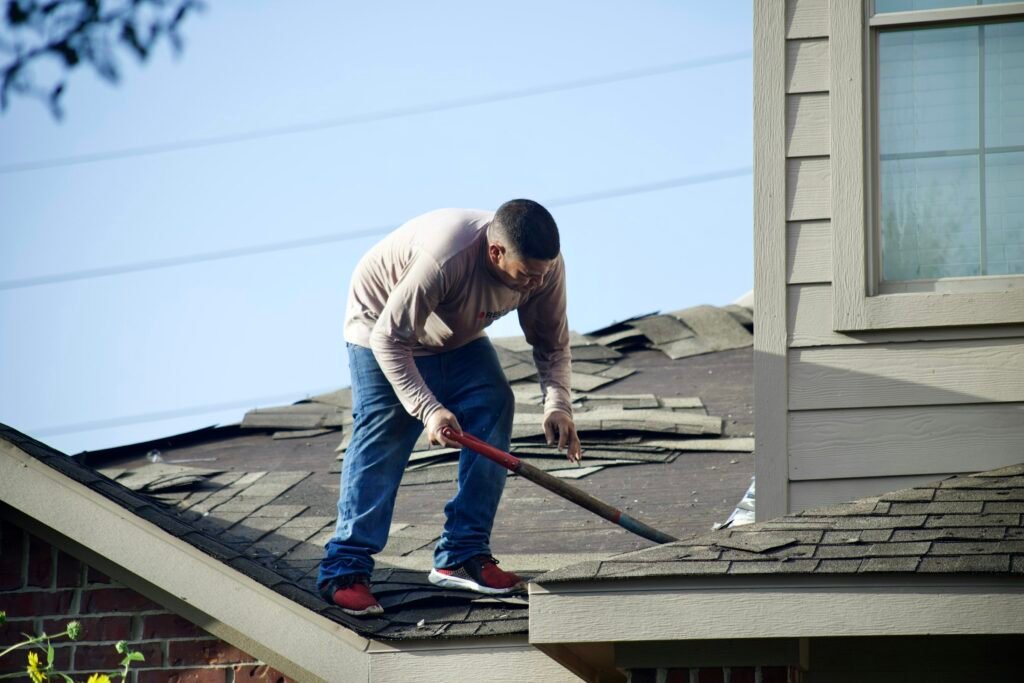
What asphalt shingle roofing Houston costs depends on the shingle, the pitch, and the condition of the decking underneath — and the full cost tables, by material and by what moves the price, are in our roof replacement cost guide. The short version, in published US national ranges. Angi’s roof replacement cost guide publishes the national ranges behind these figures.
| Shingle | Installed, US national range | Lifespan |
|---|---|---|
| 3-tab | $3.50–$5.50 / sq ft | 15–20 years |
| Architectural | $4–$6 / sq ft | 25–30 years |
| Impact-resistant (Class 4) | $5.50–$7 / sq ft | 20–30 years |
For a typical Houston home, a full architectural-shingle replacement runs roughly $8,000–$14,000 in the same national ranges, tear-off included. These are published national ranges — not RoofDetect Pro’s prices and not Houston prices. Your written estimate is what your job costs. The guide linked above explains what moves the number: size and pitch, tear-off vs overlay, decking surprises, valleys and flashing, permits ($250–$500 in Houston), and what a low bid usually leaves out.
How Much Asphalt Shingle Roofing Houston Costs by Home Size
The per-square-foot ranges above are the rate; the size of the roof is what sets the total. Angi’s shingle roof cost guide, updated October 1, 2026, puts the national average cost to shingle a roof at $10,500, with most homeowners spending between $7,500 and $24,000. For asphalt shingle roofing houston homeowners, its home-size table — for gable roofs at a standard pitch — breaks the total down like this:
| Home size | Average shingle roof cost, 2026 (Angi) |
|---|---|
| 1,000 sq ft | $2,250–$8,000 |
| 1,500 sq ft | $3,375–$13,500 |
| 2,000 sq ft | $4,500–$18,000 |
| 2,500 sq ft | $5,600–$22,500 |
| 3,000 sq ft | $6,800–$24,000 |
Two things about that table. First, roof area is bigger than floor area: a 2,000-square-foot home usually has more than 2,000 square feet of roof once pitch and overhangs are counted, so find your home’s row and treat it as a starting point, not a quote. Second, the material is only part of the bill. Angi puts shingle materials at $1.50 to $6.00 per square foot — shingles are sold by the “square”, 100 square feet, so $150 to $600 per square — with 3-tab materials at $0.70 to $2 per square foot, architectural at $1 to $3, and luxury at $1.50 to $4. Labour is around 60% of the total job, averaging $6,300 and ranging from $4,500 to $10,800. Angi’s Texas average for a shingle roof is $9,700 — a state average, not a Houston price, and your written estimate is what your job costs. Angi’s shingle roof cost guide publishes the national ranges behind these figures.
The add-ons are where a low quote usually hides its gaps. Angi lists shingle removal at $1 to $5 per square foot ($1,000 to $5,000 in total), decking repairs at $2 to $5 per square foot, and about 10% more for a steep-pitch roof. Permits run $250 to $500, the same range in our roof replacement cost guide. And the repair-versus-replacement maths has dollar figures too: Angi puts the average shingle roof repair at $1,150 against $10,500 for a replacement, and its rule is to repair when the repair costs less than 20 to 25% of a replacement. Our roof repair cost guide works the same comparison out for Houston, and a roof inspection — Angi puts it at around $250 — is the step that settles which side of that line your roof is on.
Insurance: Storm Damage vs Wear
Whether insurance pays for a shingle roof depends on the same Texas rule as any roof claim: sudden and accidental damage is covered, wear and tear is not. The Texas Department of Insurance’s guide to insurance and your roof explains what to know when buying a policy or filing a claim.
Usually covered: shingles torn off by wind, hail bruising and cracking, a tree limb through the roof, rain that enters through storm damage. Document the storm date and photograph the damage before anything is cleaned up — the same evidence rule as any storm claim. See our storm damage page for the claim steps.
Usually not covered: a roof that curled and cracked with age, granule loss after 20 Houston summers, algae streaks, or a leak that has been dripping for months while nobody looked. Those are maintenance and age — the insurer’s answer is the same as for a worn-out roof.
The deductible question: on most Texas policies the wind and hail deductible is a percentage of the home’s insured value — typically 1% to 5%. A shingle repair that costs less than the deductible is not a claim at all; it is a repair you pay for. And if any contractor offers to waive, eat or pay your deductible, walk away — in Texas it is illegal for a contractor to pay, waive or rebate an insurance deductible (House Bill 2102), and it can put the whole claim at risk.
A dented metal roof that still keeps water out may not be covered
Texas has an optional endorsement, HO-145, that excludes cosmetic hail damage to roof coverings — but it can only be attached to a policy that is receiving a premium credit for an impact-resistant roof, and it is void unless the homeowner signed it. Before choosing metal, ask your insurer whether your policy carries a cosmetic hail exclusion.
A roof tells you for years before it leaks
Granules collecting in the gutters after every storm, shingles curling at the edges, and bald patches where the black mat shows through are the signs Houston homeowners notice first. A typical asphalt shingle roof lasts 20 to 25 years — and a hot, poorly ventilated attic ages it faster.
FAQs
What is the difference between 3-tab and architectural shingles?
3-tab shingles are a single flat layer, rated for 60–70 mph winds and lasting 15–20 years. Architectural shingles are two layers laminated together, rated for 110–130 mph winds and lasting 25–30 years, with a dimensional look that mimics wood shake or slate. Architectural costs more up front and is the standard recommendation for Houston homes.
How long does an asphalt shingle roof last in Houston?
Architectural shingles typically last 25 to 30 years in Houston, and 3-tab shingles 15 to 20 years — often fewer, because Houston heat shortens their life. Premium designer shingles can last 30 to 50 years. Proper attic ventilation and regular maintenance help any shingle reach the long end of its range.
Are asphalt shingles good for Houston weather?
Yes — if they are the right kind. Modern architectural shingles are made for high winds (up to 130 mph), heavy rain and extreme heat, and Class 4 impact-resistant versions are made for hail. 3-tab shingles, at 60–70 mph, are not a good match for Gulf Coast storms.
What are Class 4 impact-resistant shingles?
Shingles made with rubberised polymers that flex instead of cracking under hail, tested by dropping 2-inch steel balls on them. They cost more than standard architectural shingles, but they survive the hail Houston gets — and some insurers price a Class 4 roof differently, so ask your carrier.
How much does asphalt shingle roofing cost?
For asphalt shingle roofing Houston homeowners, the published US national ranges are $3.50–$5.50 per square foot installed for 3-tab, $4–$6 for architectural (about $8,000–$14,000 for a typical home), and $5.50–$7 for Class 4 impact-resistant. Those are national guide figures, not RoofDetect Pro’s prices — the full tables are in our roof replacement cost guide, and your written estimate is what your job costs.
Can I put new shingles over my old roof?
In some cases, yes — but a full tear-off is the right job in Houston. An overlay hides rotten decking, adds weight, and can void the shingle warranty. Removing the old layers lets the crew inspect the decking, install proper underlayment, and make sure the new roof performs as designed.
What causes black streaks on my shingle roof?
Algae — a blue-green algae that feeds on the limestone filler in shingles and thrives in Houston’s warm, damp air. The streaks are mostly cosmetic, but they hold moisture against the shingle. Algae-resistant shingles carry copper granules that kill the algae on contact.
Do I need HOA approval for a new shingle roof?
Often, yes. Many Houston neighbourhoods and HOAs restrict shingle colours, materials and type — some require architectural shingles and forbid 3-tab, and some limit the colour palette. Get the HOA’s roofing rules in writing and the approval before materials are ordered.
Should I repair or replace my shingle roof?
If the repair is approaching a large share of a replacement quote and the roof is near the end of its 15–25-year life, replace. If the roof is young and the damage is local — a few missing tabs, one flashing leak — repair. Widespread curling, heavy granule loss, several leaks or soft decking all point to replacement.
How do I choose a shingle colour?
Pick from the architectural blends that suit your home’s style and your HOA’s rules, and remember darker colours absorb more heat while lighter colours reflect it. Browse shingle lines by style, colour and wind resistance on the Owens Corning shingles page linked above before you choose — the roof will be there for 25 years.
How many nails per shingle should a Houston roof have?
Four nails per shingle is standard, and six is the high-wind pattern. GAF’s terms make the difference plain: 130 mph wind coverage needs special installation — starter strips at the eaves and rakes, and four nails for LayerLock shingles or six for others. Placement matters as much as count: every nail must land in the marked nailing zone.
How long does it take to install a new asphalt shingle roof?
Stripping the old shingles and installing the new roof takes a professional crew one to two days, and up to three for a larger or steeper roof, according to Angi’s 2026 shingle guide. Permits, material delivery and decking repairs add time before the crew starts, so the full job runs longer than the days on the roof.
What should an asphalt shingle quote include?
A complete quote lists tear-off, decking repairs priced per sheet, underlayment, leak barrier in valleys, new flashing, ventilation, starter strips, ridge cap shingles and drip edge — plus the permit and a nail sweep. If a quote lists only shingles, ask what is missing before you compare prices: the missing items are where the cheapest bid usually saves money.
What is the FORTIFIED Roof standard?
FORTIFIED Roof is a construction standard from the Insurance Institute for Business & Home Safety (IBHS) that asks for a sealed roof deck, stronger fastening and better edge details so a roof holds together in high wind and wind-driven rain. It applies to asphalt shingle roofs, and our FORTIFIED page explains what the standard asks for.
How do I make my asphalt shingle roof last longer in Houston?
Keep the gutters clear, trim overhanging branches, and have the roof inspected yearly and after any major storm, so small damage is found before it becomes a leak. Never pressure-wash shingles: the spray strips the granules that protect the asphalt from the sun. Good attic ventilation helps too: a cooler attic slows the heat ageing that shortens Houston roofs.