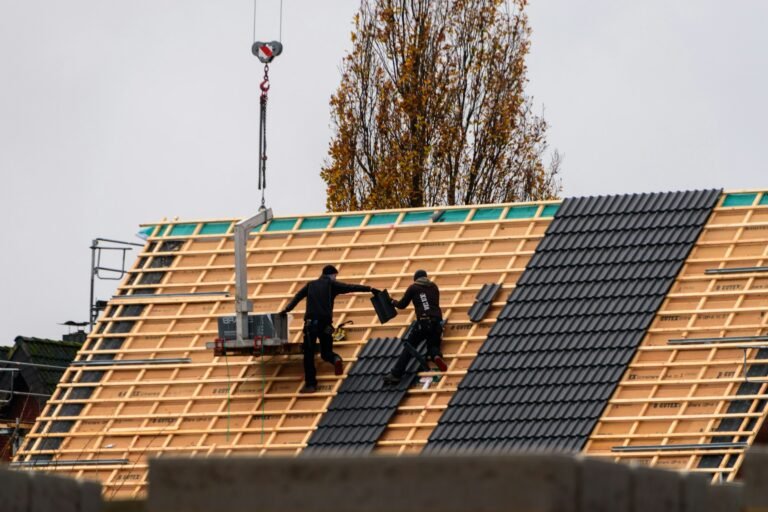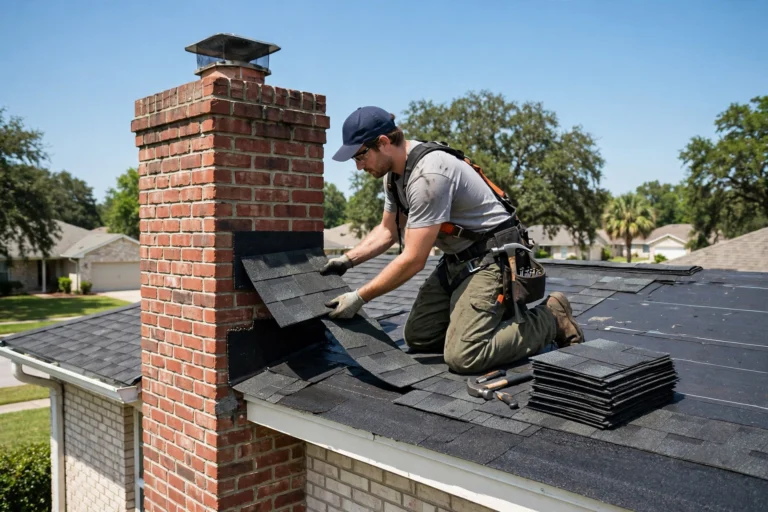
Hurricane Season Roof Prep Checklist for Houston, TX
Hurricane season roof prep is not a weekend job in May. It is a spring job — because by the time a storm is named, the only work left is on the ground.
The Atlantic hurricane season runs June 1 to November 30, peaking mid-August to late September. Every year, Houston homeowners discover the same thing: the roof that survived forty ordinary windstorms fails in a hurricane, and the repair that would have cost a few hundred dollars in March costs thousands in September. The difference is almost never the wind speed. It is the duration.
Call (831) 623-8078 — free roof inspection and written estimate, no obligation.
Availability varies by ZIP code, time and service — call (831) 623-8078 to confirm. Weekend and holiday availability is not guaranteed everywhere.
A Hurricane Is Not Just a Very Bad Windstorm
Houston gets windstorms every year and most roofs survive them. A hurricane fails roofs that handled forty windstorms, and the reason is not only the wind speed. It is the duration. A thunderstorm tests your roof for twenty minutes. A hurricane tests it for 24 to 48 hours, from shifting directions, while forcing five to twenty inches of rain at every seam. Anything marginal fails eventually.
Swirling wind arrives from shifting directions and creates uplift on parts of the roof that never see it in a normal storm, working fasteners loose rather than simply pushing on them. Wind-driven rain forces water uphill and sideways under shingles that are still attached. And debris becomes projectiles: patio furniture, planters, grills — and in Houston, the trampoline, a common source of roof puncture damage after a named storm.
Most hurricanes that reach Houston are Category 1 to 3 — and a Category 1 will still take a roof apart if the maintenance was neglected. That is why hurricane season roof prep starts in March, not in August.
The Pre-Season Checklist: March and April
Hurricane season roof prep has one deadline that matters: March and April. That is the only window in which problems can still be fixed unhurried. By June every roofer in Houston is booked, and once a storm is named it is too late to schedule work. Book the inspection in early spring:
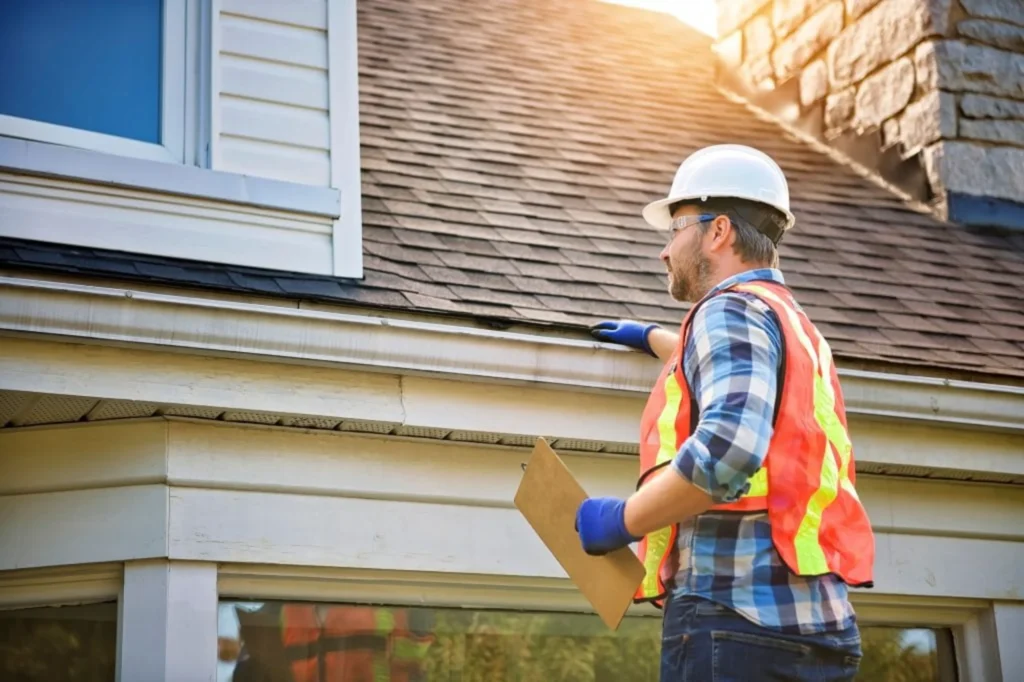
1. Get a professional inspection. A ground-level look misses most of it. A roofer on the roof checks for lifted or creased shingles, missing granules, exposed nail heads and loose flashing. See our roof inspection page for what it covers.
2. Fix the loose shingles. A lifted shingle in March is a cheap repair. In August it is the edge where wind gets under the rest of the row. Check for cracked, curling or missing shingles and have them secured or replaced — and consider replacing old or damaged shingles with ones rated for hurricane-force winds, as the National Weather Service Houston guide recommends.
3. Check the flashing, the pipe boots and the ridge caps. Leaks almost never start in the middle of a field of shingles; they start where something interrupts the roof. Check the metal flashing around chimneys, vents and valleys for gaps, rust or cracked sealant. Check the rubber pipe boots — Houston sun bakes the neoprene until it splits, usually in year eight to twelve — and the ridge caps for cracks and loose seals, and the valleys for debris that dams water back under the shingle edges.
4. Clear the gutters and downspouts. Twenty inches of rain has to go somewhere, and clogged gutters back water up under the roof edge. Clear them, check that the drip edge is firmly nailed, and probe the fascia boards behind the gutters for soft, rotted wood.
5. Trim the trees. Cut back any branches hanging over the roof — a big limb in the wind is the most expensive thing that can hit a roof. Branches should be trimmed back six to ten feet from the roofline, and dead limbs removed entirely.
6. Check the attic. On a sunny day, look for daylight through the deck and for water stains on the rafters or insulation. Check that the attic ventilation is working — vents that let wind-driven rain in are a problem, and a hot, damp attic rots a roof from the inside.
7. Photograph everything. Roof slopes, gutters, the attic — with the date on the file, stored somewhere other than the house. These before-photos are the single most valuable thing on this list.
48 to 72 Hours Before Landfall
Hurricane season roof prep in the last 48 to 72 hours before landfall is ground work, not roof work — and nobody should be up a ladder with a storm coming. Do this instead:
- Secure everything loose. Patio furniture, planters, trampolines, grills, garbage cans — these become the debris that punctures roofs. Bring small items inside; tie down what cannot be moved.
- Trim what you safely can, or remove obviously dead limbs over the house.
- Clear the gutters if they can be reached safely from a ladder.
- Photograph the roof and the house from every side — dated, before the storm. This removes most pre-existing-damage arguments from an insurance claim later.
- Find your policy and read the deductible. Most Texas policies carry three separate deductibles, and the hurricane or named-storm one is commonly 2% but can be 5% or 10% on Gulf Coast policies — a percentage of your dwelling coverage, not the claim. On a home insured for $400,000, a 5% deductible is $20,000 — know that number before the storm, not after it.
- Know your evacuation zone and your route, and follow the order if local officials tell you to leave. The Ready.gov hurricanes page covers zones, alerts and supplies in one place.
During the Storm
Stay inside, in an interior room away from windows, and stay informed through local news and official alerts. If local officials tell you to evacuate, do so immediately — do not wait to see how bad it gets.
Do not go outside during the storm, or during the eye: the improved weather is temporary, and storm conditions return with winds from the opposite direction, sometimes in a matter of minutes. If you are trapped by flooding, go to the highest level of the building — but do not climb into a closed attic, where rising water can trap you. Do not walk, swim or drive through flood water: six inches of fast-moving water can knock you down, and one foot can sweep your vehicle away.
After the Storm: Photos First, Then the Tarp
Once officials say it is safe, start from the ground — binoculars, not a ladder. Wet, debris-covered roofs are how people get hurt after storms.
Photograph everything before anything is moved or cleaned up. That is where the spring prep pays for itself: the dated before-photos you took in March, next to the after-photos you take now, establish what the storm did and what was already there. Photograph the roof and the interior damage and date it all. Undocumented damage is a harder insurance claim.
Check the attic for daylight, wet insulation and staining on the decking. Get it tarped if water is coming in — stopping further damage is a duty under your policy, not a courtesy. See our emergency roof repair page and our storm damage page for the claim steps.
Report to your insurer promptly. Your policy requires it. Most Texas policies cover sudden and accidental storm damage, not gradual leaks, and Texas gives you one year from the date of loss to file — but waiting costs you evidence, and every roofer in the city is triaging at once.
One coastal note: if your home sits in one of the Texas Department of Insurance’s designated catastrophe areas — the first-tier coastal counties and parts of Harris County near Galveston Bay — a new roof needs a windstorm Certificate of Compliance to keep the home eligible for TWIA coverage. Check the address on TDI’s windstorm inspection page before the roofer starts.
FORTIFIED Basics: The Strongest Roof Standard, in Plain Terms
FORTIFIED is a voluntary construction standard from the Insurance Institute for Business & Home Safety (IBHS), the insurance industry’s research lab. It is not a brand, not a material and not a warranty. It has three tiers, each building on the previous one: FORTIFIED Roof, Silver and Gold.
FORTIFIED Roof, the entry tier, requires five things beyond ordinary code construction: a sealed roof deck — the seams between deck panels taped or covered by an adhered membrane, so the deck itself sheds water even if the storm strips the shingles (IBHS says sealing the seams can reduce water intrusion by up to 95%); ring-shank nails in an enhanced pattern, which grip the wood instead of pulling out under suction (IBHS says the tighter pattern can double the deck’s uplift resistance); locked-down edges, with wider drip edge metal and fully adhered starter strips; roof vents tested to keep wind-driven rain out; and installation by a certified FORTIFIED roofing contractor, required for projects permitted on or after 1 November 2025.
The designation is issued by IBHS, not the contractor, and an independent IBHS-certified FORTIFIED Evaluator inspects and photographs the work at stages that become invisible once the roof is finished. Certificates are valid for five years. IBHS estimates that re-roofing a 2,000-square-foot home to FORTIFIED Roof typically adds $1,000 to $3,000 plus a verification fee — their estimate, not ours. If you are replacing a roof anyway, it is the upgrade worth asking your roofer about by name.
What Prep Cannot Fix
Good hurricane season roof prep does not make a roof hurricane-proof — and anyone claiming otherwise is selling. Two limits are worth knowing honestly.
First, a shingle’s wind rating cannot be retrofitted: 3-tab shingles rated to 60 to 70 mph stay rated to that whatever you do — only replacement changes it. Architectural shingles are rated 110 to 130 mph; standing-seam metal higher still. Loose flashing can be resecured and failed seals renewed, but the rating of the shingle itself is fixed on the day it was installed.
Second, no roofing system is immune to a hurricane. What preparation buys is not invulnerability — it is the difference between a roof that loses a few shingles and a roof that loses its deck, between a claim with dated photos and a claim argued from memory. That difference is worth a spring afternoon.
FAQs
When should I start preparing my roof for hurricane season?
Start hurricane season roof prep in March or April. The Atlantic hurricane season runs June 1 to November 30, and spring is the only window where problems can still be fixed unhurried. By June every roofer in Houston is booked, and once a storm is named nothing can be scheduled at all.
What does a pre-season roof inspection check?
It checks the seven weak points: loose, cracked or missing shingles; flashing around chimneys, vents and valleys; split rubber pipe boots; ridge caps; valley debris; drip edge and fascia; and the attic for daylight, stains and ventilation. A ground-level look misses most of it — the inspection happens on the roof and in the attic.
My roof is old. Can hurricane prep fix it?
To a degree. Loose flashing can be resecured, failed seals renewed and vents replaced. What cannot be retrofitted is the shingle’s wind rating — a 3-tab roof rated to 60 to 70 mph stays rated to that whatever you do. If the roof is at the end of its life, the honest answer is replacement, and a replacement is the time to build wind resistance in properly.
What should I photograph before a storm?
The roof from every side, the gutters, the attic, and the house itself — with the date on the file, stored somewhere other than the house. Dated before-photos next to dated after-photos establish what the storm did and remove most pre-existing-damage arguments from an insurance claim.
What do I do first after a hurricane damages my roof?
Photograph everything before anything is moved or cleaned up, check the attic from inside, get it tarped if water is coming in, and report to your insurer promptly. Texas gives you one year from the date of loss to file, but waiting costs you evidence — and every roofer in the city is triaging at once after a major storm.
What is a FORTIFIED roof?
FORTIFIED is a voluntary construction standard from the Insurance Institute for Business & Home Safety (IBHS), not a brand or a warranty. The FORTIFIED Roof tier requires a sealed roof deck, ring-shank nails in an enhanced pattern, locked-down edges and tested vents, installed by a certified contractor and verified by an independent IBHS evaluator. The designation is issued by IBHS and is valid for five years.