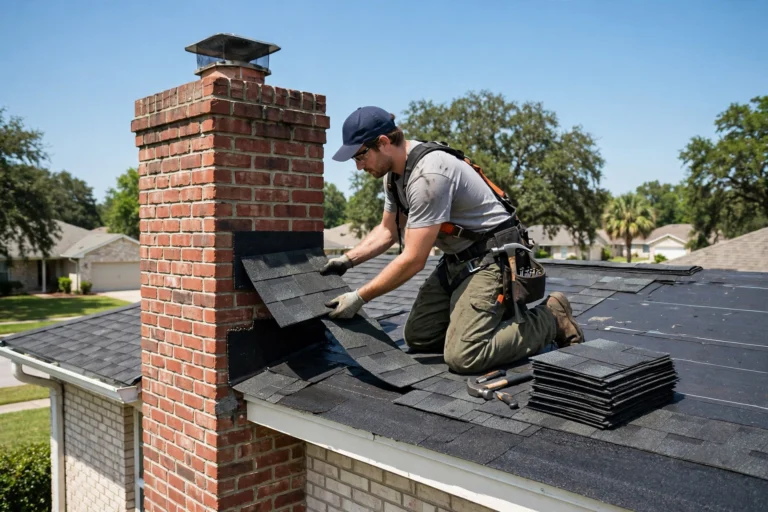
Roof Leak After Heavy Rain: What to Do First
A roof leak after heavy rain is a race against the clock — not because the drip is big, but because the water you cannot see is already spreading through your ceiling, your insulation and your walls.
The first ten minutes decide how much of your home you save. Not the repair — that comes later, on a dry day — but the containment: catching the water, protecting what is under it, and recording what happened first.
Call (831) 623-8078 — free roof inspection and written estimate, no obligation.
Availability varies by ZIP code, time and service — call (831) 623-8078 to confirm. Weekend and holiday availability is not guaranteed everywhere.
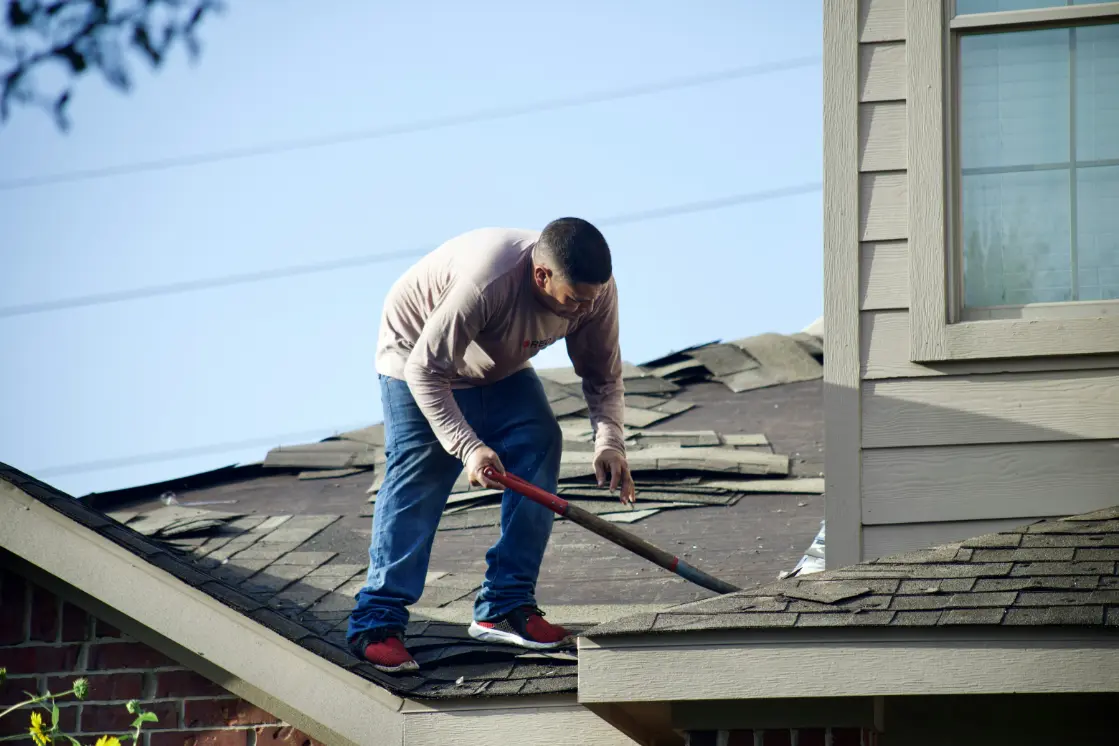
The First 10 Minutes: Bucket, Valuables, Photos, Power
Do these in this order, before you think about the roof at all.
- Get a bucket under the drip. A bucket, a large pot, a storage tub — whatever holds water. Put a towel in it to catch splashes, and lay plastic sheeting on the floor around it, edges run up the wall, so water cannot wick into the baseboards and carpet pad.
- Move the valuables. Electronics, documents, artwork, rugs, upholstered furniture — out of the wet zone first. Water travels along rafters and inside walls before it shows, so protect a wider area than the drip. Anything you cannot move, lift onto blocks and cover with sheeting.
- Photograph it before you touch anything else. The drip, the stain, the wet floor, the furniture that got hit — from a distance and up close. Undocumented damage is a harder insurance claim, and you cannot photograph it after you have cleaned it up.
- Check the electrics. If the drip or stain is near a light fixture, fan, outlet, switch or smoke detector, treat that circuit as live. Turn off the breaker for that room if it is safe to do so, and do not drill or probe the wall. Water near wiring is a genuine hazard.
- Start drying now. Mould can colonise wet drywall within roughly 24 to 48 hours. Run the air conditioning and a fan on the wet area — in Houston humidity, wet drywall does not dry on its own, and wet insulation does not dry at all.
Do not stand on a chair or ladder directly under an active leak. Water plus a slippery surface plus a live circuit is the combination that hurts people.
The Bulging Ceiling: Do Not Poke It Blindly
A sagging, water-filled bulge in the ceiling is the one sight that should change how you move. A bulge can hold several gallons, and if it lets go it takes a larger piece of ceiling with it — and anything standing underneath.
Do not stand under it, press on it, or poke it with your face beneath it. Clear the room, lay plastic sheeting on the floor, and put a bucket under the lowest point. Then, from the side — never from underneath — make a small relief hole at the bulge’s edge with a screwdriver or a nail, and let the water drain into the bucket. A small hole you control is better than a ceiling that decides for itself.
If the ceiling is sagging badly or the framing is bending, stay out of the room until it has been assessed. That is structural damage, not a leak.
Why Heavy Rain Finds Leaks Light Rain Never Shows
A roof that survives a drizzle for years can fail in one Houston downpour, and the reason is pressure. A roof leak after heavy rain usually starts at a failure that only opens under storm pressure: wind-driven rain under lifted flashing, water dammed behind debris in a valley until it runs back under the shingle edges, a pipe boot split by Houston sun that holds in a light rain and gives way when the rain comes sideways.
Light rain falls straight down and runs off. Heavy rain arrives with wind, and wind finds the weak points — the lifting seam, the loose flashing step, the valley holding a dam of leaves. A leak that appears only in heavy rain is still a leak, and the failure that opened once is now a little wider than it was.
Houston makes this worse: Gulf storms drop inches of rain in hours, and flat sections hold that water instead of shedding it. If your roof has a flat section, check whether the drain or scupper is blocked by leaves or debris. Water still standing there two days after rain is a problem, not a puddle.
Tracing the Entry Point
The stain on your ceiling is not where your roof is leaking. Water gets through at one point, runs along the underside of the decking or a rafter, and only drops when it hits a nail tip, a seam or a low point — then spreads across the top of your drywall and comes through somewhere else. When a roof leak after heavy rain shows up as a stain, the entry point is usually uphill of it, sometimes several feet away.
The best time to trace it is during the rain, while the water is moving. Go into the attic with a bright flashlight — not your phone screen — and look for water actively dripping. Follow it backward along the beams and insulation to where it enters, and mark every damp spot with chalk and a photograph. The highest damp spot is usually closest to the entry point.
One Houston warning: a Houston attic in summer can reach 130°F or more. Go early in the morning, keep the trip short, and step only on the joists, never on the drywall below you.
Do not climb onto the roof to find it — not when it is wet, not when it is steep, not during the storm. A wet roof is genuinely dangerous, and almost nothing you apply to a wet roof bonds properly anyway. The roof can wait until it is dry. See our roof leak detection page for how a professional traces a leak once the weather clears.
Emergency Tarping: a Stop-Gap, Not a Repair
A roof leak after heavy rain is exactly when a tarp earns its keep — and exactly when people misunderstand what a tarp is. A tarp is not a repair. It is temporary protection that stops water getting in while the repair or the insurance claim gets sorted out.
A proper tarp job: a heavy-duty polyethylene tarp, run over the ridge and lapped like shingles so water runs off it, fastened to wood battens screwed into the decking. Battens, not bricks — a tarp weighed down with bricks lifts in the first gust. A battened tarp rides out a normal front and stays until the permanent repair happens.
Two things to know before anyone tarps your roof. First, photograph the damage before the tarp goes on — the tarp covers the evidence your insurer needs to see. Second, a tarp is not forever: Texas sun makes the material brittle after weeks, a couple of months at the outside. A tarp that is still there in three months is a repair that never happened.
Tarping is a job for somebody with the right equipment on a dry day, not for a homeowner on a wet roof in a storm. See our emergency roof repair page for how emergency tarping works.
Emergency or Scheduled Inspection?
Not every leak after heavy rain is an emergency. The difference is what you can see.
It is an emergency when: water is actively coming through the ceiling and you cannot contain it; the roof is open — missing shingles, a hole, a tree through the deck; the ceiling is sagging or bulging badly; water is near the electrics and you cannot safely kill the circuit; or there is structural damage you can see from the ground. In those cases, get the water stopped first — tarp it — and get an inspection as soon as conditions allow.
It is a scheduled inspection when: the stain appeared during the rain but the drip has stopped, nothing is sagging, the electrics are clear, and the roof looks intact from the ground. The leak is real and needs looking at this week — a leak that shows as a small stain has often been running for weeks — but it does not need a crew in the middle of the storm.
Documenting It for Insurance
A roof leak after heavy rain is a claim only if you can prove what the storm did — and the proof is made in the first hour, before anything is cleaned up or covered.
Photograph and video everything, before you move it: the drip, the stain, the wet floor, the damaged belongings, the roof from the ground if it is safe. Note the date and time of the storm, and its name if it had one. Keep a simple damage log — what got wet, where the water entered, where it landed, and the approximate value of anything damaged — and keep every receipt: buckets, tarps, fans, a dehumidifier. Most policies count reasonable emergency work as part of the claim, and the Insurance Information Institute’s guide to settling claims after a disaster says the same: protect the property, save the receipts, and do not make extensive permanent repairs until the adjuster has assessed the damage.
The Texas rules: most policies cover sudden and accidental water damage — a storm tears flashing loose, water comes in, you act fast. They usually will not cover a gradual leak that went unrepaired for months. Texas gives you one year from the date of loss to file. Do not throw anything away or start permanent repairs before the adjuster sees the damage — starting permanent work first can cost you the claim.
One more line, because it catches people out: standard homeowners policies do not cover flood damage. Rain coming through a hole the storm made in the roof is usually covered; water rising from the ground is a separate flood policy. See our storm damage page for the claim steps.
Is It the Roof at All? The Leak-vs-Condensation Check
Not every drop of water under a ceiling after rain is a roof leak — but rain is the best test there is. Ask one question: does it get wet when it rains, and only when it rains? If the stain grows during or right after rain, it is the roof. If it appears on a clear, hot afternoon with no rain for days, something inside your attic is making water.
In Houston, the usual suspect is your air conditioner. Most Houston homes have the air handler in the attic, and on a hot, humid day it pulls up to 50 gallons of water out of the air, by home-inspector guidance. That water drains through a condensate line; when the line clogs, the drain pan overflows and water comes through the ceiling in exactly the same place a roof leak would show. The tell: water dripping from the small pipe stub under your eaves means the secondary drain is working because the primary line is blocked — an AC problem, and a roofer cannot fix it.
What It Costs
A typical leak repair in the US runs $400–$1,500 (typical $700–$1,100) in published national ranges — not RoofDetect Pro’s prices and not Houston prices. The expensive part is never the repair itself; it is the damage a leak does while nobody is looking. Wet insulation loses its value, damp decking rots, and mould follows moisture.
FAQs
What should I do first about a roof leak after heavy rain?
Bucket under the drip, valuables out of the wet zone, photographs before you touch anything else, and the breaker off if water is near any light fixture, outlet or switch. Then start drying — mould can colonise wet drywall within roughly 24 to 48 hours. Do not climb onto a wet roof.
Is a bulging ceiling dangerous?
Yes. A bulge can hold several gallons, and if it lets go it takes a larger piece of ceiling with it. Do not stand under it or poke it with your face beneath it. From the side — never from underneath — make a small relief hole at the bulge’s edge and drain it into a bucket. If the ceiling is sagging badly, stay out of the room until it has been assessed.
Can I tarp my own roof?
Not during the storm, and not on a wet roof. A proper tarp is run over the ridge, lapped like shingles and fastened to wood battens screwed into the decking — not weighed down with bricks. It is a job for somebody with the right equipment on a dry day. Photograph the damage before the tarp goes on, or the tarp covers the evidence your insurer needs.
Why does my roof only leak in heavy rain?
Because the failure only opens under storm pressure: wind-driven rain pushed under lifted flashing, water dammed behind debris in a valley, a pipe boot split by Houston sun that holds in a drizzle and gives way when the rain comes sideways. A leak that appears only in heavy rain is still a leak — and the failure that opened once is a little wider than it was.
Does insurance cover a roof leak after heavy rain?
Usually, if the storm caused it: most Texas policies cover sudden and accidental water damage, and rain coming through a hole the storm made in the roof is typically covered. They usually will not cover a gradual leak that went unrepaired for months. Document everything before cleanup, do not start permanent repairs before the adjuster sees the damage, and remember Texas gives you one year from the date of loss to file.
How do I know it is a roof leak and not condensation?
Ask whether it correlates with rain. If the stain grows during or right after rain, it is the roof. If it appears on a clear, hot afternoon, check the AC condensate line — most Houston homes have the air handler in the attic, and a clogged drain line overflows the pan and drips through the ceiling in exactly the same place. Water dripping from the small pipe stub under your eaves means the secondary drain is working because the primary line is blocked.