
Does Insurance Cover Roof Damage in Texas?
Does insurance cover roof damage? Yes — if a storm broke it. No — if it simply wore out. That one line decides most Texas roof claims.
A hailstorm that bruises your shingles, wind that tears them off, a tree that falls on the roof: sudden, accidental events, and a standard Texas homeowners policy is built to pay for them. A 25-year-old roof that finally gives out, shingles curling from years of Houston heat, a leak dripping quietly for months: gradual, and the insurer will call them maintenance — your cost, not theirs.
This guide explains how that line works in Texas, what actually decides how much you get paid, and the Houston-specific traps — including the one Harvey taught the whole city.
Call (831) 623-8078 — free roof inspection and written estimate, no obligation.
Availability varies by ZIP code, time and service — call (831) 623-8078 to confirm. Weekend and holiday availability is not guaranteed everywhere.
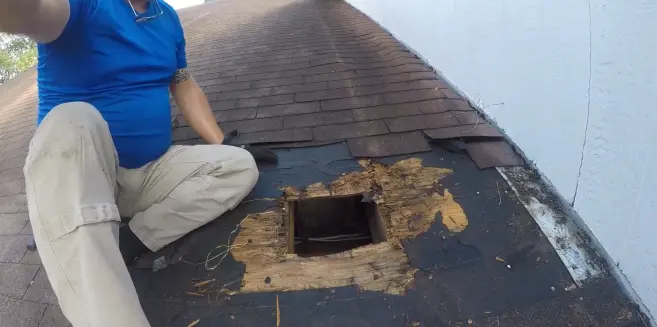
Does Insurance Cover Roof Damage? What Your Policy Covers — and What It Does Not
A standard Texas homeowners policy (the common HO-3 form) covers roof damage from a “covered peril” — a sudden, accidental event. In Houston, the big ones are:
- Hail — bruised, cracked or dented shingles. Hail is the claim Houston sees most after a storm.
- Wind — shingles lifted, creased or blown off.
- Fallen trees or branches
- Fire and lightning
- Weight of debris
What it generally does not cover is gradual damage: normal aging, wear and tear, rot, or problems that trace back to deferred maintenance. If a roof fails because it is old, that is on the homeowner. The dividing line is almost always “sudden and accidental” versus “slow and expected” — and that is why documenting the storm matters. If you can show the damage came from a specific hail or wind event, you are on the right side of that line. See our storm damage page for what that evidence looks like, and our how to find a roof leak guide for tracing a leak to its source.
Houston’s Special Case: Rain Through the Roof vs. Rising Water
This is the distinction Hurricane Harvey taught Houston in 2017, and it still decides claims today. It comes down to which way the water travelled.
Vertical water — usually covered. Rain that comes down from above, through a roof, wall or window damaged by wind, hail or a falling tree. If wind tears shingles off and rain pours through the opening, that interior water damage is generally covered by a standard homeowners policy. The Texas Department of Insurance (TDI) has noted that a policy may cover water damage from rain entering a home when the roof was damaged in the storm. Many policies also carry a wind-driven rain provision: interior damage from wind-driven rain is covered when wind or hail first creates an opening. Rain seeping through intact windows, doors or worn seals may be excluded.
Horizontal water — usually not covered. Water that rises from the ground: river or bayou overflow, storm surge along the Gulf Coast, and rainwater that collects on the ground and flows into a home (surface water). Texas courts have treated rainwater that pools in a yard or street and then runs into a house as excluded surface water, even when it came from the same storm. That damage falls under a separate flood insurance policy, most often through the National Flood Insurance Program (NFIP) — not your homeowners policy.
In a hurricane, one storm can do both: rain through a damaged roof (homeowners policy) and storm surge through the front door (flood policy). Homeowners often have to file two claims and show which damage came from which cause. Insurers do deny legitimate rain claims by relabelling them as flood or surface water, or by calling the leak age and wear — a denial can be challenged, starting with the denial in writing and an independent inspection.
Coastal note: in the Houston area’s coastal zones — Galveston Bay, Clear Lake, League City — wind coverage may sit with the Texas Windstorm Insurance Association (TWIA) rather than your standard policy, and a WPI-8 windstorm certificate may apply. Check your declarations page to see where your wind coverage lives.
RCV vs. ACV — The Two Letters That Decide Your Cheque
The single biggest factor in what you actually receive is whether your roof is covered at Replacement Cost Value (RCV) or Actual Cash Value (ACV).
RCV pays what it costs to replace your roof with similar new materials, minus only your deductible. If a new roof costs $20,000 and your deductible is $2,500, the insurer’s share is $17,500.
ACV pays the replacement cost minus depreciation for the age and wear of your old roof. On a 15-year-old roof, that depreciation can be steep — an ACV payout might cover only around 40% of what a new roof actually costs, leaving you to make up the rest on top of your deductible.
Same storm, same roof, very different cheque — find out which one you have before the next storm, not after. When you ask does insurance cover roof damage, the peril is only half the answer; RCV or ACV decides the cheque.
If you have RCV, the claim usually comes in two cheques. The first is the ACV amount — full scope minus depreciation and your deductible — which gets the work started. The second is the recoverable depreciation, released after you prove the work was done, usually within a policy deadline (often 180 days to a year from the loss). Miss the window and you can forfeit it. Keep every document: estimate, adjuster paperwork, invoices, receipts.
The 20-Year-Old Roof Question
This is the question Houston homeowners ask most — in other words, does insurance cover roof damage on a 20-year-old roof? — and the answer has two parts.
Age alone cannot get you dropped. A Texas Department of Insurance rule, 28 TAC §21.1006, says insurers cannot decline to write a home policy, or refuse to renew one, because of the age of the house or its parts, roofing included. On September 29, 2026, TDI proposed a clarification to make that plain: companies can base decisions on the physical condition of the roof, but not on age alone. That proposal is not yet final. Age and condition are different questions — and the roof’s condition is fair game.
But age changes how much you get paid. Many Texas insurers switch older roofs to ACV coverage automatically — commonly at 15 years, some budget carriers as early as 10. Your home might be insured at full replacement cost while your roof rides on a separate ACV schedule buried in the policy. On an ACV policy, depreciation on a 20-year-old roof can run 50% to 80%. TDI gives a stark example: on a $10,000 roof with a $4,000 deductible, RCV pays $6,000 whatever the roof’s age; ACV pays $4,500 on a 5-year-old roof, $3,000 on a 10-year-old roof, and nothing on a 20-year-old roof.
Two more age-related catches: some policies carry a “cosmetic damage” exclusion, most often for metal roofs — hail dents that do not puncture or leak can be classed as cosmetic only and paid nothing. And once a roof is 15 to 20 years old, insurers increasingly order an inspection before renewal.
Your Deductible — and the Offer You Must Refuse
On most Texas policies the wind and hail deductible is a percentage of your home’s insured value — typically 1% to 5% — not a flat few hundred dollars. A 2% wind/hail deductible on a $350,000 Houston home means you pay the first $7,000 of any hail or wind claim. Read your declarations page before you file: your roof’s age, how it is paid, and your deductible.
One warning every Texas roofing guide repeats: if any contractor offers to “waive,” “eat,” “absorb” or “pay” your deductible to win your business, walk away. In Texas it is illegal for a contractor to pay, waive or rebate your insurance deductible — a criminal offence under state law (House Bill 2102, effective September 1, 2019) — and it can put your entire claim at risk. A legitimate roofer always shows your deductible as your responsibility on the paperwork.
Should You Even File a Claim?
Not every storm-damaged roof should become a claim. Work through three questions first:
- Is the damage bigger than your deductible? If the repair costs less than the 1–5% wind/hail deductible, filing gains you nothing — you pay it all anyway. A small, isolated repair is often the better call. See our roof repair page for when repair makes sense.
- Is it claim-worthy damage? A professional inspection before you file can tell you whether the damage is the kind insurers pay for — and save you filing a claim that gets denied. A denied claim still sits on your record.
- Will it raise your rates? It can, especially with multiple claims — but a single legitimate storm claim is what your coverage is for.
If the damage is isolated — one pipe boot, one valley, a few shingles — a straightforward repair is usually the smarter move. If it is widespread, or the roof cannot be repaired to match, insurers will often approve a full replacement. When in doubt, get the inspection first.
The Claim in Brief
Our storm damage page covers the claim steps in full. The short version:
- Document before you call your carrier. Note the storm date, photograph everything, keep any hail or debris evidence. Photos taken before any clean-up are the record your insurer will want.
- Mitigate the damage. Tarp the opening, move belongings, stop the water getting worse — your policy requires it, and it is also the fastest way to limit the bill.
- File promptly. Texas policies require prompt notice, and most set a filing deadline — commonly within one year of the storm, sometimes less.
- Walk the roof with the adjuster. A roofer present at the inspection can point out damage an adjuster might miss, and the written photo report from your own inspection gives you something to compare the adjuster’s findings against.
- Know the timelines. Texas law generally requires insurers to accept or deny most claims within 15 business days of receiving all the necessary documentation. If a claim is denied, get the denial in writing and an independent inspection — and know that Chapter 542A requires written notice to the insurer at least 61 days before filing a lawsuit over storm damage, and suits under Chapter 541 generally must be filed within two years.
For flood damage, the timelines are different: NFIP policyholders must submit a signed proof of loss within 60 days of the flood, and an appeal to FEMA must be filed within 60 days of a denial letter. TDI’s consumer help line is 800-252-3439.
FAQs
Will insurance cover a 20-year-old roof in Texas?
That is the short version of does insurance cover roof damage for an older roof: usually yes, if a covered event caused new damage — hail or wind that bruised or tore shingles is covered even on an old roof. What changes is the payout: many carriers switch roofs to ACV at 10 to 15 years, and depreciation on a 20-year-old roof can run 50% to 80%. Age alone cannot get your policy dropped, but condition can.
Does homeowners insurance cover flood damage from rain?
It depends on how the rain entered. Rain through a roof, wall or window damaged by wind or hail is generally covered. Rain that collects on the ground and flows into the home is treated as excluded surface water — that needs a separate flood policy.
Is wind-driven rain covered?
Many Texas policies cover interior damage from wind-driven rain only when wind or hail first creates an opening in the roof or walls. Rain seeping through intact windows, doors or worn seals may be excluded.
Will filing a roof claim raise my rates?
It can, especially with multiple claims — but a single legitimate storm claim is what your coverage is for. A pre-claim inspection helps you avoid filing for damage that would not be approved, which is the outcome you most want to steer clear of.
Will insurance replace my whole roof or just repair it?
It depends on the extent of the damage and your adjuster’s assessment. If storm damage is widespread or the roof cannot be repaired to match, insurers will often approve a full replacement; minor, isolated damage is usually handled as a repair.
Can a roofer pay my deductible?
No. Paying, waiving or rebating a homeowner’s insurance deductible is illegal in Texas (House Bill 2102) and can jeopardise your entire claim. Your deductible is always your responsibility.