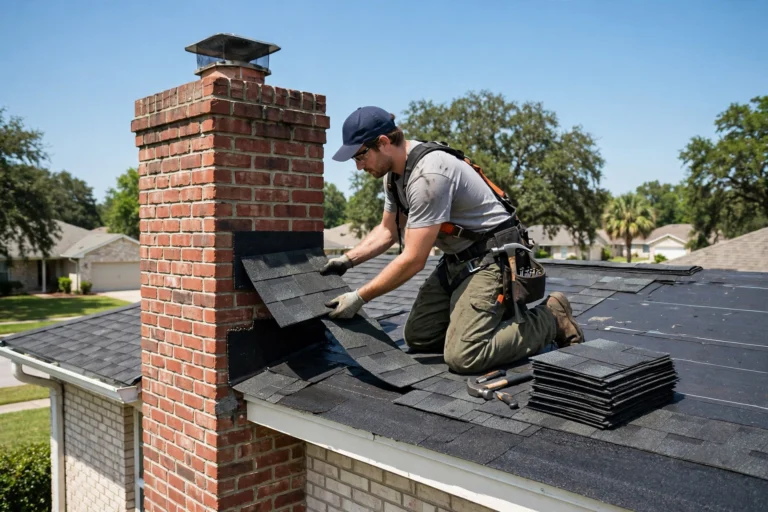
Signs You Need Roof Repair After a Houston Storm
These are the signs you need roof repair after a Houston storm — most storm damage on a Houston roof is invisible from the street, and the damage you cannot see is the damage that costs the most.
A Houston storm does not have to tear shingles off your roof to hurt it. Hail bruises a shingle without removing it. Wind breaks the seal under a shingle that then settles back flat. Rain finds the weak spot weeks later. By the time a stain appears on your ceiling, water has often been travelling through your roof for a while. That is why knowing the signs you need roof repair after a Houston storm matters — a bruise you miss today can become a leak weeks later.
Call (831) 623-8078 — free roof inspection and written estimate, no obligation.
Availability varies by ZIP code, time and service — call (831) 623-8078 to confirm. Weekend and holiday availability is not guaranteed everywhere.
Signs You Need Roof Repair After a Houston Storm — Check Within 24–48 Hours
Do the check as soon as it is safe, ideally within 24–48 hours after the storm passes. Do not climb onto the roof: a wet or damaged roof is slippery, and walking on bruised shingles can crack them further and muddy an insurance inspection. Everything in this guide can be checked from the ground with binoculars, from a ladder at the eaves, or from inside the attic.
Walk around the whole house, not just the front. Wind damage usually shows on the windward side and along edges and ridges first. Bring your phone and photograph everything you find, with the date — photos taken before any clean-up are the record your insurer will want. See our roof inspection page for what a professional inspection covers, and the storm damage page for the claim steps in full.
1. Missing, Cracked, Curling or Lifted Shingles
The most obvious sign — and the one people most often miss, because they only look at the front of the house.
- Missing shingles leave bare underlayment or decking showing. Even one missing shingle is an open hole.
- Cracked or curled tabs point to shingles dried out by Houston heat and then hit by wind or hail. Curling edges are usually age; fresh cracks after a storm are usually storm damage.
- Lifted or creased shingles are wind damage even when the shingle is still in place. Wind catches the bottom edge, breaks the seal strip underneath, and bends the shingle sharply along its fastening line. It settles back flat, but the crease has cracked the asphalt backing — and on the next heavy rain, wind-driven water blows underneath the unsealed tab.
- Shingle pieces in the yard after high wind mean the roof lost material, even if the gap is not visible from the ground.
A few missing or creased shingles in one area is usually a repair. Missing shingles across several slopes is a different conversation — see the repair-vs-replacement note at the end.
2. Granules in the Gutters — Your Shingles Are Losing Their Armour
Those coarse, sand-like grits washing out of your gutters after a storm are roofing granules — the ceramic coating that protects the asphalt in a shingle from Houston’s UV. Hail knocks them off on impact; heavy rain washes them down.
A small amount of granules after a big storm is normal on an older roof. Piles of dark grit at the gutter outlets, or bald, dark patches on the roof surface where the granules are gone, are not. Once the granules are gone, Houston’s summer sun breaks down the exposed asphalt within months, and rain starts getting through. Bald spots also mean the shingle has lost years of its remaining life in one storm.
3. Hail Bruises — The Damage You Have to Feel
Hail rarely punches a visible hole. What it does is bruise: the hailstone crushes the granules off and fractures the fibreglass mat underneath. The spot looks like a dark circle where the granules are missing, and it feels soft when you press it lightly with a thumb. That soft spot is the bruise — and it is the leak that shows up weeks or months later, after the UV has finished off the exposed asphalt.
You cannot safely feel for bruises from the ground, and you should not climb up to try. What you can check from the ground is the collateral evidence: dents in soft metal — aluminium downspouts, gutter rims, vent caps, and the fins on your outdoor AC unit. Hail that dented your gutters almost certainly bruised your shingles too. Round impact marks on window screens and painted siding are the same clue.
Insurance adjusters test hail damage with a 10-foot by 10-foot test square chalked on each roof slope: if they find roughly 8–10 verified hail bruises inside that 100-square-foot area, the slope can qualify for full replacement under standard underwriting guidelines.
A warning: hail damage is easy to fake and easy to misread. A real inspection looks for bruising with the granule loss and mat fracture together. If someone offers to “find” hail damage by tapping the roof with a hammer, send them away — that is the fake-damage trick our inspection page warns about, and it can void a legitimate claim.
4. Water Stains, Peeling Paint and Damp Smells Inside
If water has reached the inside, the roof has already been open for a while.
- Yellow or brown stains on ceilings, especially near the tops of walls, that appear or grow after rain.
- Peeling paint, bubbling texture or warped drywall — water behind the surface, not on it.
- A damp or musty smell in a room that was fine before the storm, or a stain that only appears when the wind drives rain from one direction.
Remember the leak rule from our roof repair page: the stain is almost never directly under the entry point. Water travels along decking and rafters before it finds a weak spot in the ceiling. A stain in the living room can mean damage over a bedroom. That is why the inspection looks in the attic, not just at the stain.
5. What the Attic Tells You
If you can get into the attic safely in daylight, look — and take photos — before anything dries out:
- Damp or matted insulation under a particular slope, or insulation that has gone flat and grey.
- Dark spots on the underside of the decking, water stains running down rafters, or rusty nail heads.
- Daylight between the boards — a hole you can see from inside is a hole rain can get through.
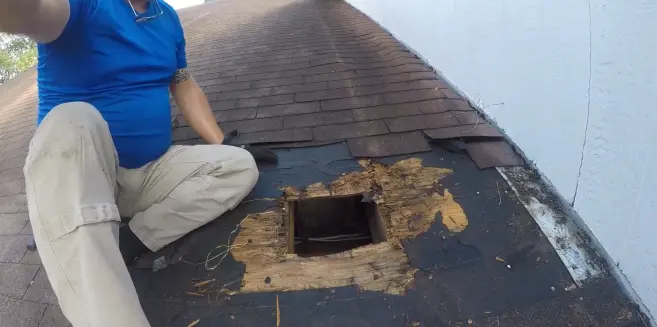
- Wet decking that feels soft when pressed. Soft decking is rot, and rot spreads.
If the attic is too hot, too cramped or you are unsure, leave it — the inspection visit covers the attic properly, with a moisture meter rather than a guess.
6. Sagging, Dips and Damaged Edges
- A sagging or uneven roofline is a structural warning, not a cosmetic one. It usually means water-damaged decking or rafters underneath. Do not wait on this one — get it looked at before the next rain.
- Bent gutters, loose flashing and lifted ridge caps. Damage at the edges usually comes with damage higher up the slope, and flashing is the leak point at every wall, chimney, vent and skylight.
- Debris and branches on the roof. A branch can puncture a shingle or scrape granules off a whole strip. Clear it only if you can do so safely from the ground.
7. The Same Leak, Again — Or Leaks in More Than One Room
One leak after one storm is a repair. A leak that comes back after every heavy rain, or small leaks appearing in different rooms, means the roof is struggling as a system. The cost check from our leak repair guide is a useful one: if the repair bill is approaching a large share of a replacement and the roof is near the end of its life, replacement is usually the better spend.
Age matters too. Most asphalt shingle roofs in Texas last about 15–25 years. A roof that looks fine at 20 years old after a hailstorm may still have bruised shingles with no life left in them — the storm just finished what the sun started.
8. Hail vs Wind vs Normal Wear — How to Tell Them Apart
| What you see | Likely cause | Why it matters |
|---|---|---|
| Dark circular bruises, granules gone, soft spot | Hail | Leaks weeks later; test-square count decides the claim |
| Creased or torn shingles, broken seal strip | Wind | Water blows under the unsealed tab on the next rain |
| Dents on vents, gutters, AC fins | Hail | Collateral proof the roof was hit too |
| Curling edges, cracked tabs, even wear | Age / heat | Storm may have finished it, but it is not new damage |
| Granules in gutters after every storm | Hail or age | Shingles losing UV protection faster |
Hail and age are easy to confuse — that is exactly what the adjuster’s test square and a professional inspection are for. Do not argue the cause yourself; document what you see and let the inspection establish it. That inspection is how you confirm the signs you need roof repair after a Houston storm, rather than guessing at the cause.
What to Do First After You Spot a Sign
- Photograph everything, before you clean up. Roof, gutters, yard debris, stains, attic — dated photos are the claim.
- Mitigate, don’t repair. Move valuables, bucket an active drip; a tarp is a stop-gap, not a fix. Do not start permanent repairs before the adjuster has seen the roof.
- Document before you call your carrier. Texas gives you one year from the date of loss to file — but the evidence fades fast.
- Get an inspection, not a sales pitch. See our emergency roof repair page if water is actively coming in.
- Do not sign anything on the doorstep. A legitimate contractor gives you a written estimate after an inspection and lets you decide.
FAQs
How soon after a storm should I check my roof?
Check the signs you need roof repair after a Houston storm within 24–48 hours, from the ground and the attic. Hail bruises and lifted seals are hardest to prove once the next storm has washed the evidence away.
Can I inspect my own roof after a storm?
From the ground and the attic, yes — binoculars help. Do not climb onto a wet or damaged roof. Walking on bruised shingles can crack them and muddy an insurance inspection.
What does hail damage look like on a roof?
Dark circular spots where granules have been knocked away, with a soft bruise underneath you can feel with a thumb. Dents in gutters, vents and AC fins are the ground-level clue that the roof was hit too.
How do I know if wind damaged my roof?
Look for missing, creased or lifted shingles, especially on the windward side and along edges and ridges. A creased shingle has a cracked asphalt backing even if it settled back flat — water gets under it on the next rain.
My ceiling has a stain but the roof looks fine. Is it storm damage?
Possibly — water travels along decking and rafters, so the stain is rarely under the entry point. Check the attic for damp insulation, dark decking and rusty nails, and get an inspection: the entry point may be several feet from the stain.
Will insurance cover storm damage to my roof?
Storm damage is usually covered, subject to your deductible — in Texas often 1–5% of the insured value for wind/hail — and the Texas 1-year deadline to file. Document with photos before you call your carrier, and read the full claim steps on our storm damage page.
When is it repair and when is it replacement?
A repair fits a limited problem in one area on a roof otherwise in good shape. Widespread damage across several slopes, heavy granule loss, several leaks, or soft/sagging decking point to replacement — especially if the repair bill is approaching a large share of a replacement on a roof near the end of its 15–25-year life.
Should I let a contractor who knocked on my door inspect my roof?
Get a written estimate after a proper inspection from a contractor you chose, not one who found you. Do not sign anything on the doorstep, and do not let anyone “find” hail damage by tapping the roof with a hammer.