
Slate Roofing in Houston, TX
A slate roof is stone on your roof — natural slate that can outlast the house itself, or synthetic DaVinci slate that gives you the look at about a quarter of the weight.
By RoofDetect Pro — Last updated: November 17, 2026
For slate roofing Houston, the first question is not natural or synthetic. It is whether your house can carry the weight. Natural slate is stone, and most Houston homes were never built to hold stone on the roof. That one fact decides more slate jobs than price, colour or style ever will — and it is the question this page starts with, before any talk of beauty or lifespan.
Call (831) 623-8078 — free roof inspection and written estimate, no obligation.
Availability varies by ZIP code, time and service — call (831) 623-8078 to confirm. Weekend and holiday availability is not guaranteed everywhere.
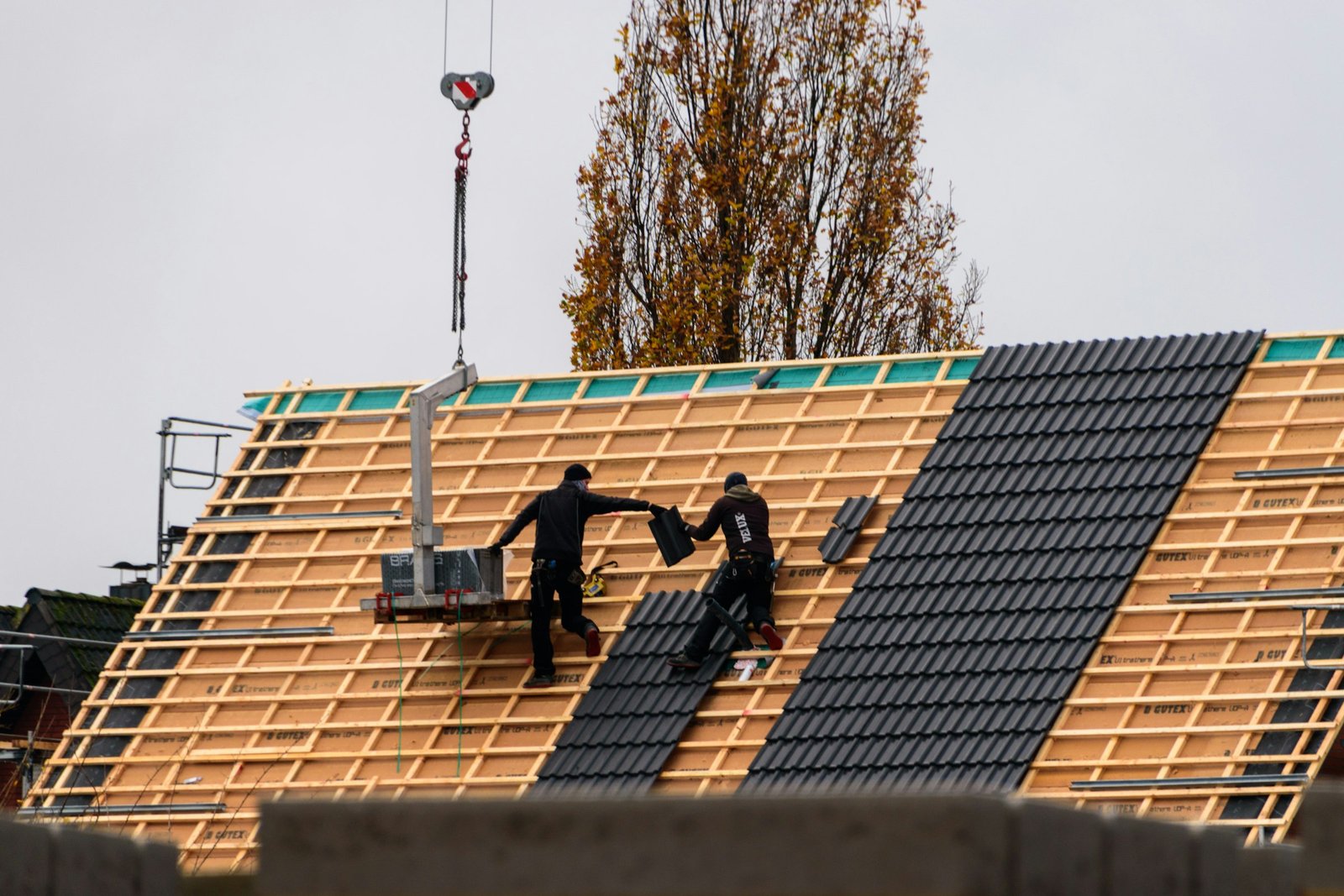
What Slate Roofing Is: Natural Stone vs Synthetic Composite
Slate roofing means two different materials that share a look.
Natural slate is stone — quarried, split into thin tiles, and laid on the roof one piece at a time. Every tile is different: its own shade, its own grain, its own edge. That is the look people mean when they say “slate roof”: a roof with depth and variation that no manufactured product quite copies. It is also the longest-lasting roof material there is. A well-maintained natural slate roof can last over 100 years, and published national guides put its lifespan at 75 to 200 years. The roof can outlast the house.
Synthetic slate — DaVinci is the best-known brand, alongside Brava, Inspire and EcoStar — is a composite tile made from engineered resins, moulded from actual slate so the texture and the non-repeating pattern carry over. It gives you the slate look without the stone: lighter, easier to install, and made to modern impact and wind ratings. It lasts 40 to 50 years by the published guides — a long roof, but not a century roof.
The choice between them is not a style choice. It is a weight choice, a hail choice, and a budget choice — and the rest of this page takes them in that order.
Natural Slate vs DaVinci Synthetic — the Honest Comparison
The slate roofing Houston homes get is one of two kinds: natural stone or synthetic composite. Here is how they compare, before the detail.
| Natural slate | DaVinci synthetic slate | |
|---|---|---|
| What it is | Quarried stone, split into tiles | Composite resin, moulded from real slate |
| Weight | Very heavy — most homes need structural reinforcement | About a quarter of natural slate — about the same as asphalt shingles |
| Lifespan | 75–200 years; can last 100+ years | 40–50 years |
| Hail | Brittle — cracks and shatters on hard impact | Class 4 impact rated — flexes and absorbs the blow |
| Wind | Holds by its own weight | 110 mph wind rating; interlocking design resists uplift |
| Fire | Stone — does not burn | Class A fire rating |
| Repairs | Individual slates replaced; matching stone is available | Individual tiles replaced; discontinued lines may not match |
| Cost (national) | $15–$30 per sq ft installed | $8–$15 per sq ft installed |
Natural slate wins on lifespan and on authenticity. Nothing else on a roof looks like real stone, and nothing else lasts as long. Its weaknesses are the ones Houston punishes: it is heavy, it is brittle, and it is expensive — both in material and in the skilled labour it takes to lay stone without breaking it.
DaVinci synthetic wins on weight, hail and price. It weighs about a quarter of natural slate, so most homes can carry it without reinforcement. It carries a Class 4 impact rating — the highest there is — and a 110 mph straight-line wind rating, with 180 mph hurricane-zone winds, per DaVinci Roofscapes. Its tiles are made of pure virgin resins with UV stabilizers, so the colour you pick is the colour you keep. Its weaknesses are the ones a buyer should hear before signing: the material has only 20 to 30 years of real-world track record, cheaper synthetics fade or go brittle after 10 to 15 years in Texas heat, and manufacturers discontinue product lines — so a repair in five years may need tiles that no longer exist.
Neither is the wrong answer. The wrong answer is choosing one without knowing which of its weaknesses applies to your house.
Weight and Structure — the First Question
Before any slate quote, one question has to be answered: can your house carry the roof?
Natural slate is stone, and stone is heavy. Most Houston homes were built for asphalt shingles — a light roof — and their trusses and rafters were sized for that load. Putting natural slate on a structure built for shingles means reinforcing the roof first: beefing up trusses, sometimes adding support beams in the attic. That structural work adds thousands to the bill before a single slate is laid, and it is the hidden cost that makes natural slate quotes look so different from each other. One quote includes the reinforcement; the next one does not, and the cheaper number is the one that leaves it out.
Synthetic slate has no such problem. At about a quarter of the weight of natural slate — roughly the weight of standard asphalt shingles — it goes on the structure you already have. No reinforcement, no beams, no surprise. That is the single biggest reason Houston homeowners choose synthetic over natural: not the price of the tile, but the price of the structure underneath it.
So the order of work is: inspection first, structure second, material third. Our roof inspection page covers what that inspection checks — and for a slate roof, the structure is the first thing it checks. If a contractor quotes you natural slate without ever looking at your trusses, that quote is not finished.
Houston Hail, Wind and Heat — the Real Test
Slate roofing Houston faces a harder test than slate anywhere else in the country. Three Houston conditions decide which slate survives.
Hail. Houston gets hail, and hail is the one test where natural and synthetic slate part ways completely. Natural slate is brittle by nature: hit it hard enough and it cracks, and a cracked slate is a leak waiting for the next rain. Synthetic slate has flexibility built into the material — when hail strikes, it absorbs the energy instead of cracking. That is what the Class 4 impact rating measures: the test drops a two-inch steel ball from 20 feet, and the material has to stay in one piece. Natural slate would shatter into pieces all over your yard under the same test. If your roof has already taken hail damage, the chemistry of the replacement decides whether the next storm leaves pockmarks that become leaks. See our storm damage page for what hail does to a roof and how a claim works.
Wind. Houston hurricanes put every roof to the test, and slate handles wind in two different ways. Natural slate holds by its own weight — it just sits on the roof, and gravity does the work. Synthetic slate holds by design: the interlocking panels connect tightly to each other and form a unified surface that resists wind uplift, so wind cannot get underneath the edges and pry pieces loose. DaVinci’s rating is 110 mph straight-line wind, with 180 mph hurricane-zone winds. Hurricane Harvey in 2017 and Hurricane Beryl in July 2024 showed Houston homeowners exactly how much wind a roof has to survive.
Heat and sun. Houston’s sun is relentless, and it is the slow test. Cheaper synthetic products fade and can turn brittle after 10 to 15 years of non-stop Texas heat — that is the honest downside of the material, and it is why the brand matters: DaVinci’s tiles use UV stabilizers for colour control, while a no-name synthetic may not. Natural slate has no such problem — stone does not fade. But natural slate has a different heat problem: it absorbs water into its pores, and Houston’s random January freezes turn that absorbed water into ice, which expands and cracks the stone. Synthetic slate absorbs no water, so there is nothing to freeze. Humidity brings the same split: natural slate’s pores hold moisture, which grows algae and green streaks; synthetic’s sealed surface gives mould and algae nothing to take root in.
Repair of Individual Slates — One Broken Slate Is Not a New Roof
A slate roof does not fail all at once. It fails one slate at a time — a cracked tile after a hailstorm, a slipped slate after high wind, a broken piece where a branch came down. And that is the good news about slate: individual slates are replaced. One broken slate is a repair, not a re-roof.
Slate roofing Houston repair jobs usually start with a single broken slate, and the work is careful by necessity. Natural slate is brittle, so the slates around the broken one have to be lifted without cracking them, the damaged piece is slid out, and the replacement is slid in and fastened — by hook or by nail, depending on the roof. It is skilled work, and it is slow work, which is why a slate repair costs more per slate than a shingle repair. But it is a small job next to a new roof, and a slate roof with ten replaced slates is still a slate roof with decades left in it.
Synthetic slate repairs are simpler — the tiles are lighter, they cut with standard tools, and they do not shatter when handled. The problem with synthetic repair is not the work; it is the match. Manufacturers discontinue their product lines fairly often, and they do not always give much warning. If you need to repair storm damage in five years, the exact tiles you need might not be available any more — and a patch of close-but-not-matching tiles is visible from the street. Before you choose a synthetic, ask how long the line has been made and whether the manufacturer keeps replacement stock. That question costs nothing now and saves a visible patch later.
When does a repair stop being enough? When the slates are failing everywhere — cracking across the whole roof, slipping in dozens of places, or the underlayment underneath has given out. Then the honest answer is a re-roof, not another repair. See our roof replacement cost guide for what a re-roof costs and what a low bid leaves out.
Underlayment — the Part That Fails First
On a slate roof, the slate is almost never the first thing to fail. The underlayment is.
Underlayment is the waterproof membrane laid on the decking under the slates — the layer that actually keeps water out when wind drives rain under the tiles. Natural slate can last 75 to 200 years. No underlayment lasts that long. So on a 40-year-old slate roof with a leak, the slates are usually fine and the underlayment underneath them is the problem: dried out, torn, or worn through at the laps. The fix is not new slates. It is lifting the slates, replacing the underlayment, and relaying the same slates back down — a job that costs far less than a new roof and leaves you with the same stone on top.
That is also why a slate roof inspection looks past the slates. A roof can look perfect from the street while the underlayment underneath is failing — the leak shows up on the ceiling long before the slates show anything wrong. Our roof inspection page covers what that inspection checks, and on a slate roof the underlayment is high on the list. A contractor who only looks at the slates has only looked at half the roof.
For synthetic slate the same rule applies, with one difference: a good installer pairs the synthetic with the right underlayment from the start, because the underlayment and the tile work as a moisture-barrier system together. The decking underneath stays dry, the rafters stay sound, and the roof system lasts as long as its weakest layer — which is the underlayment, not the tile.
Historic Homes and HOAs — Check Before You Spend
Slate is the roof of Houston’s older neighbourhoods — the Heights, River Oaks, Montrose, West University Place — and that history comes with rules.
Historic districts usually require authentic materials to preserve the neighbourhood’s original character. A synthetic slate, however good it looks, may not be permitted on a historic home. The district’s rules decide, not the roofer, and the time to find out is before the materials are ordered — not after they are on the roof.
HOAs can be just as strict. Many Houston neighbourhoods have written rules about what materials a roof may use, what colours are allowed, and whether a synthetic product counts as slate at all. An HOA rejection after installation is the most expensive kind of paperwork there is.
Newer neighbourhoods are usually the opposite: no historic rules, no material restrictions, and synthetic slate is welcome. The point is the same either way — verify what is allowed before spending any money on materials. A free inspection can confirm the roof; only the HOA or the historic district can confirm the permission.
What Slate Roofing Costs
What slate roofing Houston costs depends on the material, the pitch, the complexity of the roof, and the structure underneath it. The published national guides agree with each other closely, so here they are plainly: natural slate runs $15–$30 per square foot installed, and synthetic slate runs $8–$15 per square foot installed. These are published US national ranges — not RoofDetect Pro’s prices and not Houston prices. Your written estimate is what your job costs.
| Job | Published US national range |
|---|---|
| Natural slate, installed | $15–$30 / sq ft |
| Synthetic slate, installed | $8–$15 / sq ft |
| Standard 1/4-inch S1 hard natural slate | $24.05 / sq ft average |
| Full slate roof project (most homeowners) | $4,389–$22,377 |
| National average slate roof project | $13,348 |
Ranges: Angi (Sep 2026, 255 verified projects), The Roofing Brief 2026 Roofing Cost Report, New England Metal Roof cost guide, Roof Observations 2026 slate cost guide. The national average project of $13,348 and the most-common range of $4,389–$22,377 come from Angi’s verified-project data.
Three things push a quote from one end of the range to the other:
- Material. Natural slate is the expensive end; synthetic is the cheaper end. The gap between them on a standard 2,500-square-foot Houston roof is $15,000 to $30,000 — money that could go to plenty of other home improvements.
- Structure. A home that needs truss reinforcement before natural slate can go on pays for that work on top of the slate. A home that takes synthetic as-is does not.
- Complexity. A steep pitch, a cut-up roof with valleys and dormers, and a tear-off of the old roof all add labour. Slate is laid one piece at a time by hand, and every cut and every valley is time.
The math that sells slate is the comparison over the roof’s life, not the price alone. A synthetic slate roof at $8–$15 per square foot lasts 40 to 50 years; a natural slate roof at $15–$30 per square foot lasts 75 to 200 years. An asphalt shingle roof costs far less up front and lasts 15 to 20 years in Houston’s climate — so over a century, the shingle roof is replaced five times and the slate roof is replaced never. See our asphalt shingle roofing page for what shingles cost and how long they last here.
Get the written estimate before the work starts, and check that it names the material, the underlayment, and the structural work — so you know what you are paying for. A quote that just says “slate roof” is not an estimate.
Lifespan and Maintenance — a Roof You Mostly Leave Alone
A slate roof asks very little of its owner, and that is part of what you are paying for.
Natural slate lasts 75 to 200 years — a well-maintained one can last over 100 years — and its maintenance is mostly looking: an occasional inspection for cracked or missing slates, gutters kept clear of debris, and proper ventilation so the attic does not cook the underlayment from below. The slates themselves need almost nothing. They do not fade, they do not rot, and they do not feed mould.
Synthetic slate lasts 40 to 50 years and barely needs any maintenance during that time — but it does need watching in Houston’s heat. The cheaper products fade and go brittle after 10 to 15 years, so the inspection should look for fading, cracking and tiles that have gone stiff. A quality synthetic with UV stabilizers holds its colour far longer.
Slate roofing Houston homeowners maintain properly is a roof that outlives the mortgage, the car and probably the owner. The maintenance is an inspection now and then, a replaced slate here and there, and gutters kept clear. That is the whole list — and it is a short list for a roof that lasts a century.
Insurance: Storm Damage vs Wear
Whether insurance pays for a slate roof depends on the same Texas rule as any roof repair claim: sudden and accidental damage is covered, wear and tear is not.
Usually covered: slates cracked or broken by hail, wind or a fallen branch in a storm; slates torn off by hurricane wind; rain that enters through storm damage to the roof. Document the storm date and photograph the damage before anything is cleaned up — the same evidence rule as any storm claim. See our signs you need roof repair after a Houston storm guide for what storm damage looks like.
Usually not covered: slates that cracked with age; an underlayment that wore out after decades; a leak that has been dripping for months while nobody looked. Those are maintenance and age — the insurer’s answer is the same as for a worn-out roof.
The Class 4 discount: synthetic slate with a Class 4 impact rating can earn a discount from some Texas insurers — the rating is the same UL 2218 test the manufacturers use, and the insurer will ask for the manufacturer’s certification showing the rating. How much the discount is varies by carrier, so ask yours before you choose the material; the discount is real, but the amount is the carrier’s, not the roofer’s. The Texas Department of Insurance’s guide to insurance and your roof explains what to know when buying a policy or filing a claim.
The deductible question: on most Texas policies the wind and hail deductible is a percentage of the home’s insured value — typically 1% to 5%. A slate repair that costs less than the deductible is not a claim at all; it is a repair you pay for. And if any contractor offers to waive, eat or pay your deductible, walk away — in Texas it is illegal for a contractor to pay, waive or rebate an insurance deductible (House Bill 2102), and it can put the whole claim at risk.
FAQs
Is slate roofing a good choice for Houston?
Yes — with the right material. Natural slate lasts 75 to 200 years and looks like nothing else, but it is heavy, brittle in hail, and expensive. Synthetic DaVinci slate weighs about a quarter as much, carries a Class 4 impact rating for hail, and costs roughly half as much installed. In Houston, the hail and weight usually decide it.
How long does a slate roof last?
Natural slate lasts 75 to 200 years — a well-maintained one can last over 100 years. Synthetic slate lasts 40 to 50 years. Both outlast asphalt shingles (15 to 20 years in Houston) by a wide margin. The underlayment underneath will fail before the slate does, and replacing it is a smaller job than a new roof.
Can my house support a natural slate roof?
Maybe not — and that has to be checked before any quote. Natural slate is stone, and most Houston homes were built for light asphalt shingles. The structure may need reinforcement (trusses, support beams) before natural slate can go on, which adds thousands to the bill. Synthetic slate weighs about as much as shingles, so most homes can carry it as-is.
How much does slate roofing cost?
For slate roofing Houston homeowners, the published US national ranges are $15–$30 per square foot installed for natural slate, and $8–$15 per square foot installed for synthetic slate. The national average project is $13,348, and most homeowners pay $4,389–$22,377 (Angi, Sep 2026, 255 verified projects). Those are national guide figures, not RoofDetect Pro’s prices — your written estimate is what your job costs.
Can a single broken slate be repaired?
Yes. Individual slates are replaced — the damaged piece is slid out and a new one is slid in — and a slate roof with ten replaced slates still has decades left in it. The catch with synthetic slate is matching: manufacturers discontinue product lines, so the exact tile may not be available in five years. Ask about replacement stock before you choose the material.
Will insurance cover a slate roof?
If a storm broke it — hail, wind, or a fallen branch that cracked the slates — usually yes. If the slates simply wore out with age, or the underlayment failed after decades, usually no. The dividing line is sudden damage versus wear and tear, the same rule as any Texas roof claim.
Does synthetic slate really stand up to Houston hail?
Yes, better than natural slate. Synthetic slate carries a Class 4 impact rating — the highest there is — because the material flexes and absorbs the blow instead of cracking. Natural slate is brittle and shatters on hard impact. The Class 4 rating can also earn a discount from some Texas insurers; ask your carrier how much.
Can I put synthetic slate on a historic home?
Check first. Houston historic districts usually require authentic materials to preserve the neighbourhood’s character, and synthetic slate may not be permitted. HOAs can be just as strict about materials and colours. Verify what is allowed before spending any money on materials.
How do I maintain a slate roof?
Very little: an occasional inspection for cracked or missing slates, gutters kept clear of debris, and proper ventilation. Natural slate needs almost nothing beyond that. Synthetic slate should be checked for fading and brittleness after 10 to 15 years in Houston’s heat, especially the cheaper products.