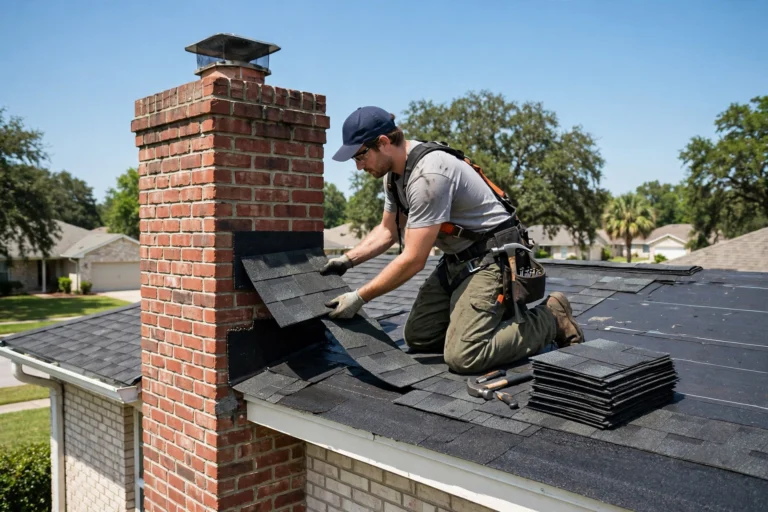
Flat vs Shingle Roof in Houston, TX
If you are replacing a roof in Houston, the flat-versus-shingle question comes up fast — and the honest answer is that your roof’s shape often decides for you. A pitched roof takes shingles; a flat section takes a membrane. The real choice is for new builds, additions, and porches. That is the flat vs shingle roof Houston question — and this guide answers it the way Houston actually tests a roof.
This guide compares the two the way Houston actually tests them: heavy rain, brutal heat, hail, and wind. Not national averages in the abstract, but what each roof does when a Gulf storm parks over Harris County.
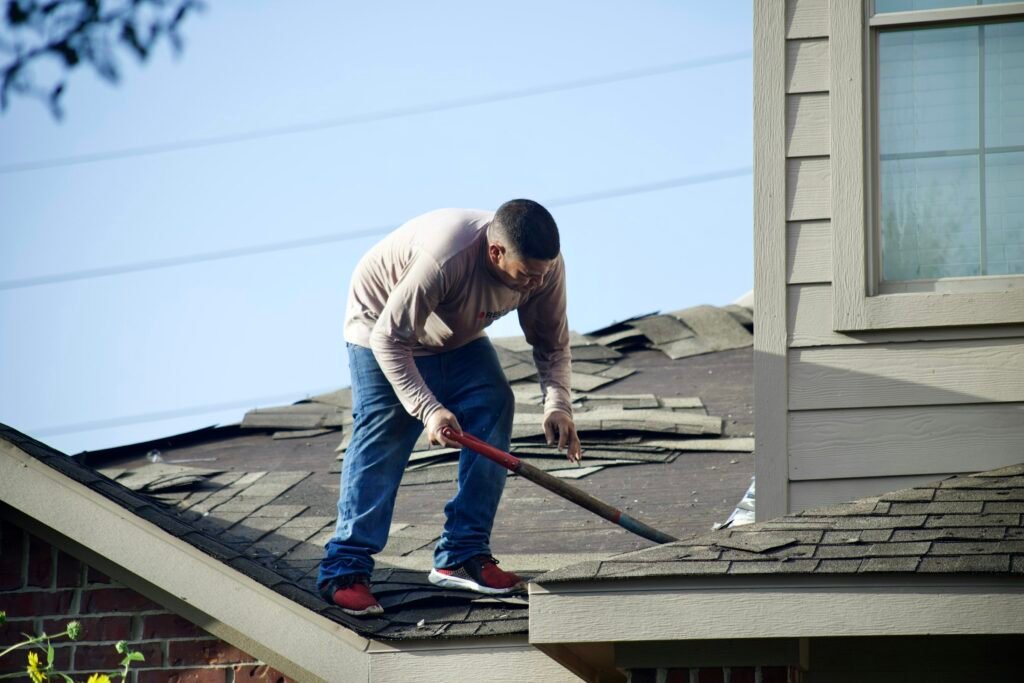
The Quick Answer: Flat vs Shingle Roof Houston
| Flat roof | Shingle roof | |
|---|---|---|
| Upfront cost | Usually lower | Usually higher |
| Lifespan | 10–25 years (national) | 15–50 years (national) |
| Rain | Depends entirely on drainage | Sheds water by gravity |
| Hail | Takes hits head-on | Deflects most hits |
| Maintenance | More — drains and seams | Less — gutters and shingles |
| Insurance | Can cost more to insure | Class 4 shingles can earn a discount |
| Solar | Easiest to angle and mount | Follows the roof’s slope |
| Best for | Additions, porches, modern builds | The main roof on most Houston homes |
In short: flat is cheaper on day one, shingle asks less afterwards. That is the short version of the flat vs shingle roof Houston comparison.
Rain: Houston’s Real Test
Houston does not test a roof with a drizzle. It tests it with the kind of rain that turned streets into rivers during Hurricane Harvey in 2017, and again when Hurricane Beryl and the May 2024 derecho hit in the same summer.
A shingle roof handles that rain the simple way: gravity moves water off in seconds, every shingle overlapping the one below. That is why pitched roofs cover the overwhelming majority of single-family homes — the design itself is the drainage system.
A flat roof is not actually flat — it has a slight pitch toward drains — but water moves slowly, and the roof depends completely on that drainage working. One clogged drain during a Houston downpour can leave a pond sitting on the membrane, stressing seams and finding any weak spot. Our rule of thumb, from our flat roof repair page: water still standing 48 hours after the rain stopped is a defect, not a puddle — so budget for someone checking those drains every few months.
Heat: The Houston Summer Problem
Houston heat punishes a roof twice — from the sun above and the attic below. Dark shingles absorb heat; a black shingle roof can run far hotter than the air around it. Light-colored shingles and a ventilated attic help, but a shingle roof always absorbs more heat than a white reflective surface.
This is the one place a flat roof genuinely wins. A white TPO membrane reflects sunlight instead of absorbing it, and reflective roof coatings can do the same job on an existing flat roof — a real saving on a big commercial roof, smaller on a residential flat section.
Texas heat also ages materials faster: Texas roofing guides put architectural shingles at 15 to 22 years of real service life in Texas heat — shorter than the numbers on a shingle warranty box — because UV, heat cycling, and hail wear them down. Flat membranes run roughly 15 to 25 years for the same reason.
Hail and Wind: What a Storm Actually Does
Hail is where the two roofs stop looking equal. A pitched roof deflects hailstones — they glance off the slope at an angle, and the impact is spread out. A flat roof takes every hailstone as a direct hit, straight down onto the membrane. That can bruise, puncture, or crack the surface, and the damage is often invisible from the ground.
Wind works the same way in reverse: a shingle roof’s slope sheds it, while a flat roof fights uplift along its edges and corners, where the membrane can peel back if the fastening is not perfect. Our storm damage page explains the 25% rule: wind damage to more than a quarter of a continuous roof plane can mean replacing the whole slope.
One upgrade is worth knowing about: Class 4 impact-resistant shingles, tested to survive hail that bruises a standard shingle. Many Texas carriers offer a discount on the wind and hail part of a policy for a Class 4 roof — check the exact number with your own carrier first.
How Long Each One Lasts
National figures from Angi put shingles at 15 to 50 years and flat roofs at 10 to 25 years. Texas guides narrow it down: architectural shingles about 15 to 22 years in Texas heat, TPO about 15 to 30, EPDM about 20 to 35, and modified bitumen about 10 to 20. Those are the national figures behind the flat vs shingle roof Houston comparison.
The spread matters more than the headline: a cheap three-tab roof and a premium architectural shingle roof are both “shingle roofs” but live very different lives, and a well-installed TPO roof outlasts a poorly installed one by a decade. Who installs it matters as much as what it is made of — in Texas there is no state roofing licence, so the crew’s track record is the credential that counts. Get a roof inspection before you sign anything, and ask for the full scope in writing.
What Each One Costs
Every figure here is a published US national range — not a Houston price and not RoofDetect Pro’s price. Your contractor’s written estimate is the only number that applies to your roof.
Angi’s national figures put a shingle roof installation at roughly $7,500 to $24,000 for a typical home, and a flat roof replacement at roughly $3,000 to $11,500. The flat roof looks cheaper — and on day one, it is. The gap comes from a simpler structure underneath and less total material, since a sloped roof has more surface area than the floor plan below it. See Angi’s flat roof vs shingles guide for the full national cost comparison.
But the honest comparison is cost per year, not cost on day one. A flat roof that lasts 15 years costs you twice in the 30 years a good shingle roof can cover — and the maintenance gap (quarterly drain and seam checks against gutters twice a year) shrinks the upfront saving further. Price the roof over its whole life, not just the quote.
Maintenance: What Each Roof Asks of You
A shingle roof’s maintenance list is short: clean the gutters twice a year, look at the shingles once a year and after every big storm, and check the flashing around chimneys, vents, and valleys. Leave it alone for a year and it will probably be fine.
A flat roof’s list is longer and less forgiving: drains checked every few months, the membrane walked for punctures, blisters, and tears, and seams probed — a seam can look fine from above and leak badly below. Skip a year and you may not notice the problem until the ceiling stains.
That is the real difference between the two: a shingle roof forgives neglect; a flat roof does not.
Insurance: The Bill You Forget to Compare
Your roof choice reaches your insurance premium. A pitched roof with Class 4 impact-resistant shingles is the gold standard for insurers, because it has proven it can take a hailstorm — and that can mean a lower annual premium.
Some flat systems are seen as a bigger liability, especially older ones or ones with a patchy maintenance record — one undetected puncture or clogged drain can cause widespread water damage, and insurers price that risk in as higher premiums or harder coverage.
Two Houston specifics: most Houston-area policies use a percentage deductible for wind and hail — often 1% to 5% of your coverage, not a flat dollar figure. And if your wind coverage runs through TWIA, the Texas Windstorm Insurance Association, windstorm repairs need a WPI-8 certificate from a certified inspector. Talk to your agent about material choices before you choose.
Solar Panels: One More Factor
If you plan to go solar, the roof’s shape decides how easy that is. A flat roof is a blank slate: installers can use ballasted mounts that do not even penetrate the membrane, and tilt the panels to whatever angle catches the most sun. A pitched roof locks you into the roof’s own slope and direction — great if it faces south, less good if it faces east or west — and every mount is a hole drilled through the roofing that has to be sealed perfectly.
One catch before you install panels on either roof: when the roof eventually needs replacing, the whole array has to come down first and go back up afterwards — a detach-and-reset, and a real cost.
When a Flat Roof Wins — and When a Shingle Roof Wins
A flat roof is the right call when: the roof covers an addition, a porch, or a garage; the home is a modern design built for a flat roofline; you want a rooftop patio or garden; the building is commercial and needs space for HVAC equipment; or you plan to go solar and want full control over panel angle.
A shingle roof is the right call when: it is the main roof on a traditional Houston home; you want the longest life with the least maintenance; hail is a regular worry; you want the lowest insurance friction; or you plan to sell and want the look most Houston buyers expect.
For most Houston homeowners the second list is the bigger one — which is why shingles cover most of the city’s homes. But a flat section on an otherwise pitched house is common here, and it is a perfectly good roof when it is built and maintained as a flat roof.
How to Decide
- How long will you own the home? Under 10 years, a shingle roof is usually the rational buy. Over 25, a longer-lived roof pays back.
- What is the roof covering? A main roof and an addition are different decisions.
- How exposed are you to hail? Hail-prone parts of the Houston area get real value from Class 4 shingles.
- What does your budget cover — this year, or over 30 years? Price the roof over its whole life, not just the quote.
- What does the house already have? If the structure is pitched, shingles are almost always the straightforward answer. If it is flat, the question is which membrane.
There is no single best roof for Houston — only a best roof for your house, your budget, and how long you plan to stay. A free roof inspection is the fastest way to get that answer for your roof, and if you need emergency roof repair after a storm, that comes first.
RoofDetect Pro is a referral service. Work is done by independent Houston roofing contractors.
Which roof lasts longer in Houston — flat or shingle?
A shingle roof, on average. National figures put shingles at 15 to 50 years and flat roofs at 10 to 25 years. In Texas heat specifically, architectural shingles run about 15 to 22 years and flat membranes about 15 to 25 years. A well-installed roof of either type outlasts a poorly installed one by years. That lifespan gap is the heart of the flat vs shingle roof Houston question.
Is a flat roof cheaper than a shingle roof in the long run?
Usually not. A flat roof costs less to install — Angi’s national figures put flat replacement at roughly $3,000 to $11,500 against $7,500 to $24,000 for shingles — but it needs more maintenance and may need replacing twice in the time of one shingle roof. Price it over 30 years, not on day one. The long-run maths is why the flat vs shingle roof Houston answer is rarely just the cheapest quote.
Can you put shingles on a flat roof?
No. Shingles need a minimum pitch of 2:12 — two inches of rise for every 12 inches of run — so water drains off. On a flat or very low-slope roof, water sits at the seams and gets underneath. Flat roofs need a membrane system: TPO, EPDM, modified bitumen, or PVC.
Does a flat roof work in Houston’s rain?
Yes, if it is built and maintained as a flat roof. It needs a slight slope to drains, clear scuppers, and regular checks. Water still standing 48 hours after the rain stopped is a defect. A shingle roof sheds the same rain by gravity, which is why it needs less attention.
Will a flat roof cost more to insure?
It can. Insurers see some flat systems as higher risk for water damage, which can mean higher premiums. A pitched roof with Class 4 impact-resistant shingles can earn a discount on the wind and hail part of a policy. Ask your own agent — the numbers vary by carrier. Insurance is one more cost in the flat vs shingle roof Houston comparison.
Which roof is better for solar panels?
A flat roof gives installers more control: ballasted mounts with no penetrations, and panels tilted to the best angle. A pitched roof is simpler to install on but locks panels to the roof’s slope and direction, and every mount is a penetration that must be sealed. Either way, remember the detach-and-reset cost when the roof is eventually replaced.